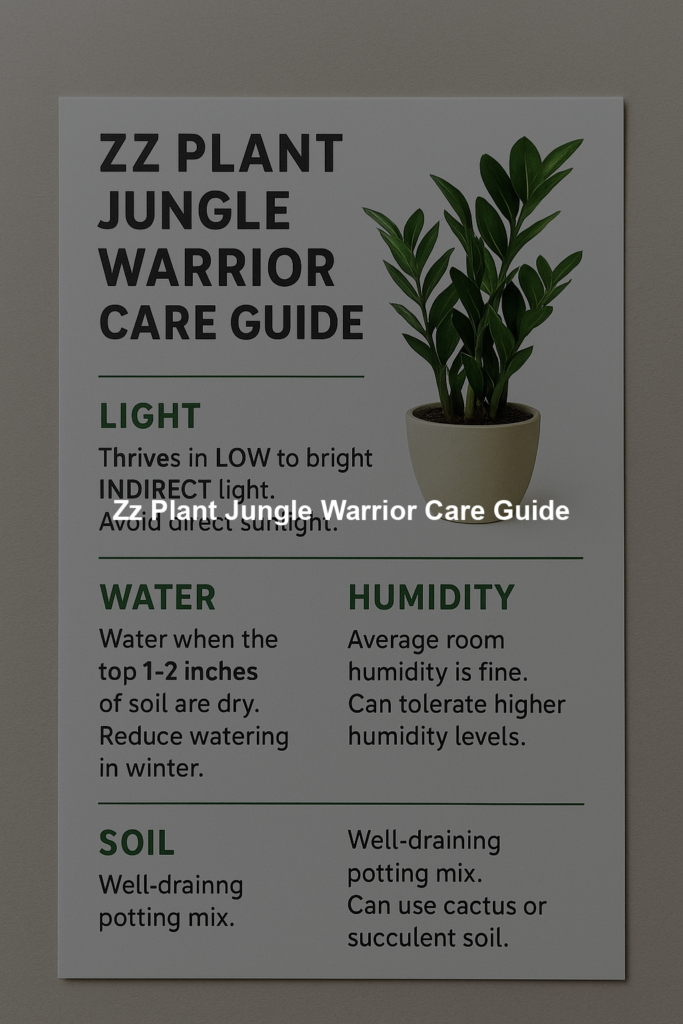
The Zz Plant Jungle Warrior Care Guide offers a systematic approach for cultivating Zamioculcas zamiifolia in both modest apartments and expansive interiors. By aligning horticultural science with contemporary design, this guide equips professionals to transform a humble foliage element into a resilient, statement‑making feature.
Key Takeaways
- Low‑light tolerance does not eliminate the need for measured artificial illumination.
- Controlled watering prevents rhizome rot, the most common cause of decline.
- Well‑draining, aerated substrate mimics the plant’s native tropical understory.
- Seasonal pruning and repotting sustain vigor and preserve aesthetic form.
Understanding the Importance of Zz Plant Jungle Warrior Care Guide
A thorough grasp of the plant’s physiological needs underpins any successful interior integration. Native to East Africa’s dry forests, the ZZ stores water in its fleshy rhizomes, a trait that informs its watering regimen, soil selection, and placement. Ignoring this evolutionary context often leads to over‑watering, fungal disease, and compromised foliage longevity. Moreover, the plant’s glossy leaves reflect ambient light, enhancing perceived brightness—an advantage that can be leveraged in low‑light zones when paired with strategic artificial lighting. Recognizing these interdependencies is the cornerstone of the Zz Plant Jungle Warrior Care Guide and distinguishes a decorative novelty from a thriving botanical component.
Expert Tips for Zz Plant Jungle Warrior Care Guide
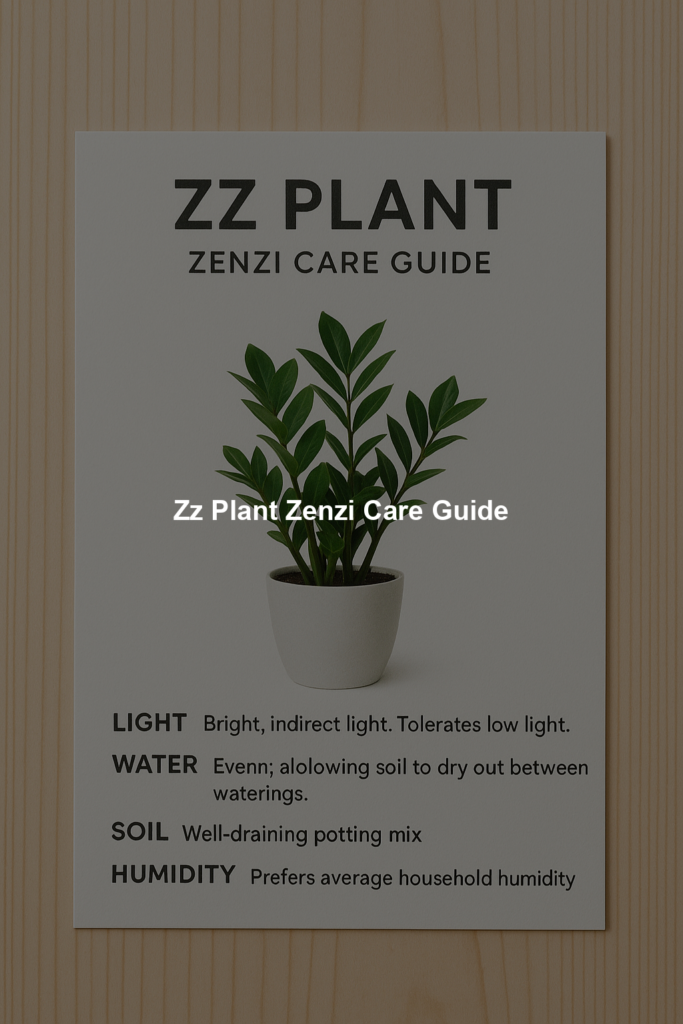
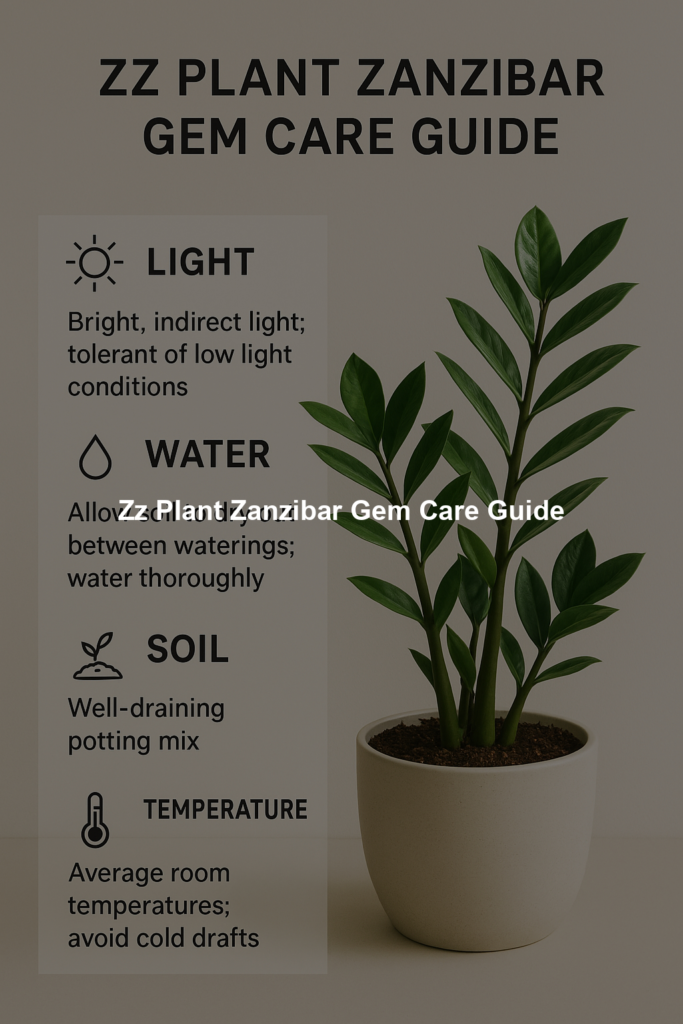
- Light Management – Position the ZZ near indirect sunlight or under cool‑white LEDs delivering 150–250 µmol m⁻² s⁻¹. Avoid direct midday sun, which can scorch the leaves and diminish the plant’s natural sheen.
- Water Discipline – Apply a deep watering schedule only when the top 2–3 cm of substrate feels dry to the touch. In winter, extend intervals to 4–6 weeks, allowing the rhizome to dehydrate fully before the next application.
- Soil Composition – Utilize a blend of 40 % coarse peat moss, 30 % perlite, and 30 % orchid bark. This mixture reproduces the aerated, porous conditions of the plant’s native forest floor, preventing root suffocation.
- Temperature & Humidity – Maintain ambient temperatures between 18 °C and 26 °C. The ZZ tolerates occasional dips to 13 °C, but prolonged exposure reduces metabolic activity. Humidity levels of 40 %–60 % are ideal; supplemental misting is unnecessary unless indoor air is exceptionally dry.
- Fertilization Protocol – Apply a balanced 10‑10‑10 soluble fertilizer at one‑quarter strength during the active growth phase (spring through early autumn). Cease feeding in late autumn to avoid stimulating weak, tender growth.
- Pest Surveillance – Inspect bi‑weekly for spider mites, mealybugs, and scale insects. Early detection permits spot treatment with neem oil or insecticidal soap, preserving the plant’s aesthetic integrity.
Light, Location, and Spatial Design
Strategic placement of the ZZ enhances both plant health and interior composition. In open‑plan offices, group several specimens near a shared light source to create a “jungle wall” that diffuses glare and adds visual depth. In residential settings, use sleek, matte‑finished planters on console tables to juxtapose the plant’s glossy foliage with minimalist décor. When integrating the ZZ into high‑traffic zones, select larger pots with drainage rings to prevent soil moisture from spilling onto flooring—a practical design consideration aligned with the guide’s emphasis on longevity.
Watering Techniques and Rhizome Care
Because the ZZ’s rhizomes function as water reservoirs, excess moisture is more detrimental than scarcity. Adopt the “soak‑dry‑soak” method: water until runoff appears, then allow the substrate to dry completely before the subsequent watering. During watering, direct the flow onto the soil surface rather than the leaf axils to avoid fungal streaks. In colder periods, consider a moisture meter to verify substrate dryness beyond visual inspection, ensuring the rhizomes enter a dormant, desiccated state conducive to health.
Soil Structure and Nutrient Dynamics
A substrate that balances moisture retention with drainage mimics the plant’s natural environment. Incorporate micro‑granular lava rock or expanded clay pellets to improve aeration within the root zone. Periodically (every 12–18 months), repot the ZZ using a fresh mix to replenish depleted nutrients and prevent substrate compaction—a subtle but vital aspect of the Zz Plant Jungle Warrior Care Guide. Avoid heavy, peat‑rich mixes that retain water excessively, as they increase the risk of rhizome rot.
Temperature Regulation and Seasonal Adjustments
Temperature fluctuations directly influence the ZZ’s metabolic rhythm. In heated indoor spaces, mitigate extreme temperature spikes by placing the plant away from drafty windows and heating vents. During winter, reduce watering frequency and refrain from fertilization, allowing the plant to conserve energy. Conversely, in summer months, increase daylight exposure by rotating the plant 90° every two weeks, ensuring uniform leaf development across all stems.
Humidity Control and Air Flow
Although the ZZ tolerates a broad humidity range, stagnant air can foster fungal pathogens. Integrate gentle oscillating fans to promote air movement without creating wind stress that could damage the foliage. In arid climates, a humidifier set to 45 % can stabilize ambient moisture, supporting optimal leaf turgidity and enhancing the plant’s glossy appearance.
Propagation and Cloning Strategies
Division of mature clumps during repotting yields genetically identical offshoots. Gently separate rhizome sections, each bearing at least two healthy shoots, and plant them in individual containers with the standard substrate mix. Maintain a moisture‑rich environment for four weeks to encourage root establishment. For advanced propagation, employ tissue culture techniques in sterile conditions, a method reserved for commercial growers seeking mass production while preserving cultivar integrity.
Pest Management and Integrated Solutions
Regular scouting is essential for early interception of infestations. Should spider mites appear, isolate the affected plant and apply a horticultural oil spray, ensuring thorough coverage of leaf undersides. For mealybug clusters, a cotton swab dipped in isopropyl alcohol can physically remove insects, complemented by a systemic neem treatment to deter recurrence. Maintaining optimal watering and ventilation reduces pest attraction, underscoring the preventive philosophy embedded in the Zz Plant Jungle Warrior Care Guide.
Styling the ZZ Within Contemporary Interiors
The ZZ’s architectural leaf shape pairs well with angular furniture and monochromatic palettes. Use contrasting pot colors—deep charcoal or matte gold—to accentuate the plant’s emerald foliage. For “jungle warrior” visual impact, cluster multiple ZZs of varying pot heights, creating tiered layers that echo natural understory strata. Incorporate low‑level LED uplighting to highlight leaf venation after dusk, reinforcing the plant’s role as both living organism and design element.
Maintenance Schedule Overview
| Month | Activity |
|---|---|
| Jan‑Feb | Minimal watering, no fertilization, inspect for cold drafts |
| Mar‑May | Increase watering, resume balanced fertilization, rotate plant |
| Jun‑Aug | Peak watering, monitor for leaf scorch, apply pest control as needed |
| Sep‑Oct | Gradual reduction of water, cease fertilization, prepare for repotting |
| Nov‑Dec | Deep dry period, inspect for pests, clean foliage |
This structured timeline simplifies adherence to the Zz Plant Jungle Warrior Care Guide, ensuring consistent care across seasonal cycles.
FAQ
How often should I water my Zz Plant in winter?
During the dormant winter months, water only when the substrate’s upper three centimeters are completely dry. This typically translates to a watering interval of four to six weeks, depending on indoor humidity and temperature. Over‑watering in winter is a common mistake that leads to rhizome rot; therefore, err on the side of dryness.
Can the Zz Plant survive in artificial light alone?
Yes, the ZZ tolerates and thrives under high‑output LED fixtures that emit 150–250 µmol m⁻² s⁻¹ of cool‑white light. Position the light source 30–45 cm above the foliage and maintain a 12‑hour photoperiod. While natural indirect light enhances leaf coloration, quality artificial lighting can fully substitute in low‑light interiors.
What type of soil is optimal for a Zz Plant in a pot?
An aerated, well‑draining mix composed of 40 % coarse peat moss, 30 % perlite, and 30 % orchid bark provides the ideal balance of moisture retention and root aeration. Adding a small proportion of coarse lava rock further improves drainage and mimics the plant’s native substrate.
How do I repot a mature Zz Plant without damaging its rhizomes?
Select a pot that is one size larger than the current container, ensuring a drainage hole. Gently loosen the surrounding substrate, lift the plant by supporting the base of the foliage, and shake off excess soil. Trim any dead or damaged rhizome sections before placing the root ball into fresh mix. Fill around the plant, firm lightly, and water thoroughly to settle the soil.
What are the most common pests affecting Zz Plants and how are they treated?
Spider mites, mealybugs, and scale insects are the primary pests. Early detection involves inspecting leaf undersides and node junctions. Treatment options include horticultural oil sprays for mites, alcohol‑dipped cotton swabs for mealybugs, and systemic neem oil applications for scale. Consistent airflow and proper watering reduce the likelihood of infestations.
Is it safe to keep a Zz Plant in a low‑humidity environment?
The ZZ tolerates humidity as low as 30 %, but prolonged exposure to extremely dry air may cause leaf edge browning. To mitigate this, place the plant near a humidifier or group it with other foliage to create a micro‑environment that retains moisture. Adequate ventilation remains essential to prevent fungal issues.