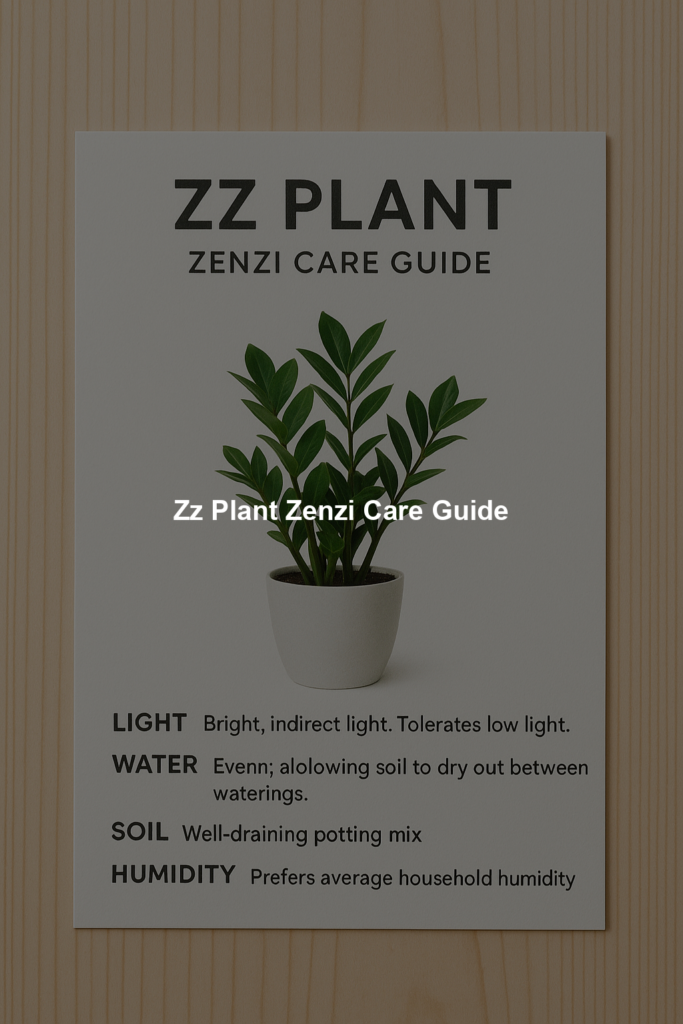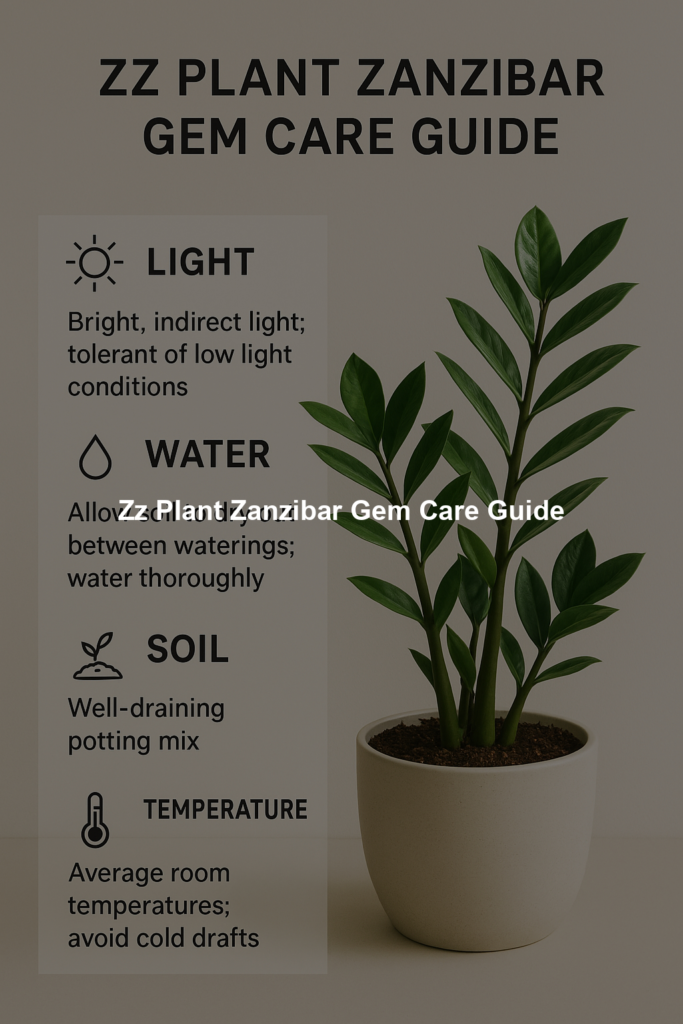
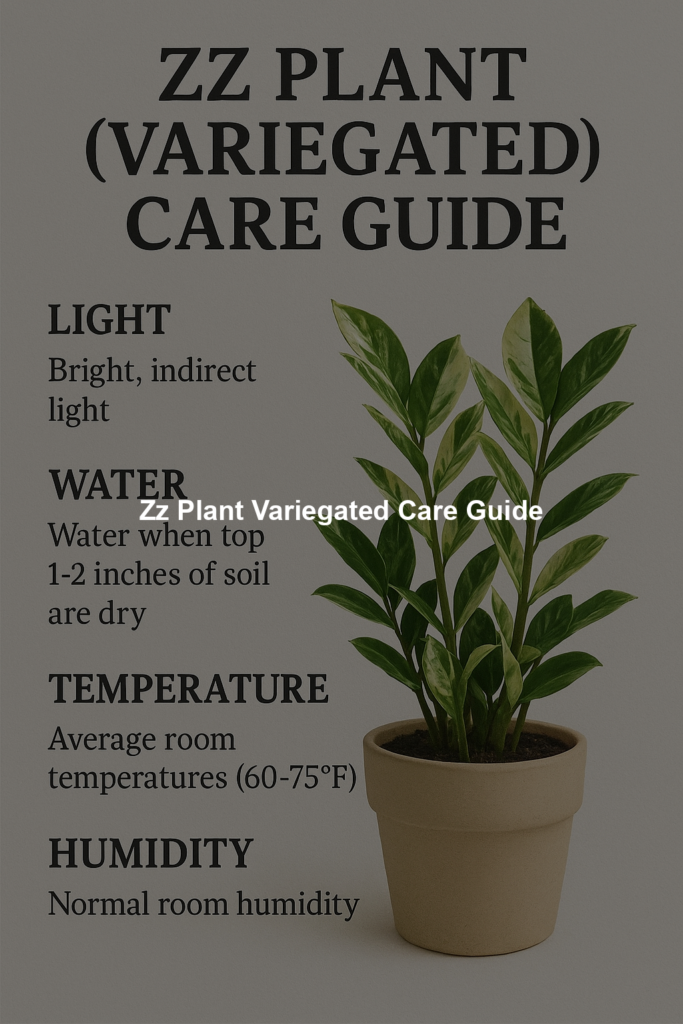
Zz Plant Variegated Care Guide provides the horticultural precision required to maintain the striking chlorophyll‑free patterns of variegated ZZ foliage while preserving the plant’s renowned resilience. Understanding the physiological nuances of variegation empowers growers to balance light, moisture, and nutrition for optimal chlorophyll retention and growth vigor.
Key Takeaways
- Variegated ZZ thrives in bright, indirect light; direct sun can scorch pale tissue.
- Water only when the top 2‑3 cm of soil feels dry; overwatering accelerates leaf loss.
- A well‑draining, aerated mix of peat, perlite, and orchid bark supports root health.
- Low‑dose balanced fertilizer in spring and summer sustains new variegated shoots.
- Propagation via leaf or stem cuttings demands humidity control to prevent desiccation.
Understanding the Importance of Zz Plant Variegated Care Guide
The variegated phenotype lacks full chlorophyll, reducing photosynthetic capacity and rendering the plant more sensitive to environmental stressors. Precise cultural practices outlined in this guide mitigate the risk of etiolation, chlorosis, and premature leaf drop. By adhering to scientifically derived watering intervals and light thresholds, growers preserve the aesthetic contrast that defines the variegated ZZ.
Expert Tips for Zz Plant Variegated Care Guide
Begin with a location receiving 4–6 hours of filtered daylight; a north‑facing window with sheer curtains provides ideal intensity. Rotate the plant monthly to ensure uniform exposure across all variegated sectors. When water is applied, use lukewarm, distilled water to avoid mineral buildup that may discolor the pale margins. Employ a moisture meter to validate the dry‑to‑wet cycle, especially in low‑humidity homes.
Light Management
Variegated ZZ requires a higher photon flux than its solid‑green counterpart. Position the plant 30–45 cm from the light source; a 2,500–3,000 lux reading indicates sufficient illumination. If natural light is limited, supplement with a 6500 K LED panel delivering 12–18 µmol m⁻² s⁻¹. Avoid direct midday sun; a brief exposure can cause irreversible bleaching of the white sectors.
Watering Protocol
The rhizomatous root system stores moisture, allowing longer intervals between watering. Insert a wooden dowel 5 cm into the substrate; emergence of a dry tip signals the need for irrigation. When watering, apply enough to saturate the medium fully, then allow excess to drain through the pot’s perforations. Reduce frequency in winter months, extending the interval to 4–6 weeks.
Soil Composition
A proprietary 40 % peat, 30 % perlite, and 30 % orchid bark blend offers optimal porosity and modest nutrient retention. The peat component acidifies the medium to pH 5.5–6.0, aligning with the plant’s natural habitat. For container gardeners, incorporate a thin layer of activated charcoal at the base to further improve drainage and prevent odor accumulation.
Temperature and Humidity
Ideal ambient temperature ranges from 18 °C to 26 °C; avoid sudden drops below 12 °C, which can trigger leaf curling. Relative humidity between 40 % and 60 % mimics tropical understory conditions. In arid climates, deploy a passive pebble tray or a humidifier set to a low mist cycle to maintain leaf turgor without encouraging fungal growth.
Potting and Repotting
Repot biennially during spring growth flush, selecting a pot one size larger with a wide base to accommodate expanding rhizomes. Prior to repotting, gently remove excess soil and trim any dead or discolored roots with sterilized shears. Position the plant so the rhizome sits just below the rim, allowing fresh soil to settle evenly around the base.
Fertilization Schedule
Apply a balanced 10‑10‑10 NPK fertilizer at one‑quarter strength monthly from March through September. During the dormant winter period, cease feeding to prevent salt accumulation. Foliar feeding with a diluted micronutrient solution containing iron chelate can restore vigor to fading variegated patterns when necessary.
Pruning and Shaping
Prune spent or overly darkened leaves at the node using clean cutters; this encourages the emergence of new variegated shoots. For indoor design purposes, employ strategic pruning to create graceful arches or a compact columnar form, enhancing visual interest in contemporary interiors.
Pest Management
Common pests include spider mites, mealybugs, and root aphids. Conduct weekly inspections, focusing on leaf margins where variegated tissue is most vulnerable. A neem oil spray applied at a 1 % concentration effectively controls infestations without harming the delicate white areas. For severe aphid outbreaks, introduce Aphidoletes aphidimyza predators under quarantine conditions.
Propagation Techniques
Leaf Cutting Method
Select a healthy variegated leaf with a clear margin; cut at the base using a sterile blade. Place the leaf on a moist sphagnum moss slab, maintaining 80 % humidity with a propagation dome. Roots typically emerge within 4–6 weeks; once robust, transfer to a small well‑draining pot.
Stem Cutting Method
Identify a stem segment containing at least two nodes and one variegated leaf. Dip the cut end in rooting hormone powder (0.8 % IBA) before planting in a 1:1 peat‑perlite mix. Keep the cutting in bright, indirect light and mist daily; root development occurs within 3–5 weeks, after which standard care resumes.
Seasonal Adjustments
In summer, increase watering frequency slightly to compensate for higher evapotranspiration rates, but never allow the medium to become waterlogged. Autumn calls for a gradual reduction in fertilizer dosage, preparing the plant for winter dormancy. During winter, relocate the plant away from drafts and heating vents to stabilize temperature fluctuations.
Integration into Interior Design
Variegated ZZ plants serve as striking focal points in minimalist spaces, complementing monochrome palettes with their green‑white contrast. Pair with sculptural metal planters for a modern aesthetic, or use woven baskets to soften industrial interiors. Their low light tolerance permits placement in corridors, bathroom corners, and office cubicles where conventional foliage would falter.
Common Issues and Resolutions
Chlorosis of White Margins
If the variegated edges turn yellowish, the plant may be receiving insufficient light. Relocate to a brighter area while monitoring for sunburn. Adjust fertilization to include a higher iron concentration, utilizing Fe‑EDDHA chelate at 0.05 % solution.
Leaf Curl and Browning
Overwatering is the primary cause; allow the substrate to fully dry before resuming irrigation. Inspect for root rot, removing any blackened roots and repotting in fresh mix.
Stunted Growth
Low ambient temperature or inadequate feeding can suppress vigor. Raise the temperature by 2–3 °C and resume balanced fertilization during the active growth period.
Maintenance Schedule Overview
| Month | Light | Water | Fertilizer | Tasks |
|---|---|---|---|---|
| Jan‑Feb | Low‑medium | Every 5‑6 wks | None | Inspect for pests, reduce humidity |
| Mar‑May | Bright indirect | Every 3‑4 wks | ¼ strength NPK | Repot if needed, propagate |
| Jun‑Aug | Bright indirect | Every 2‑3 wks | ¼ strength NPK | Prune, monitor humidity |
| Sep‑Oct | Medium | Every 3‑4 wks | Reduce to ¼ strength | Clean leaves, prepare for dormancy |
| Nov‑Dec | Low‑medium | Every 5‑6 wks | None | Final pest check, limit watering |
Zz Plant Variegated Care Guide
The comprehensive approach outlined above aligns scientific horticulture with aesthetic objectives, ensuring that variegated ZZ plants remain vibrant, healthy, and visually striking throughout their lifespan. Mastery of these protocols empowers both novice enthusiasts and seasoned interior stylists to showcase the plant’s unique bi‑color foliage with confidence.
Zz Plant Variegated Care Guide
By integrating precise environmental controls, disciplined watering regimes, and strategic propagation, growers can maximize the longevity and decorative impact of variegated ZZ specimens. Continuous observation and adaptation remain essential, as subtle shifts in indoor climate can influence the delicate balance of chlorophyll and albino tissue.
FAQ
How much light does a variegated ZZ need compared to a solid‑green ZZ?
Variegated ZZ plants require 30 %‑40 % more light intensity than their solid‑green relatives due to reduced chlorophyll. Position them near a bright east‑facing window or provide supplemental LED lighting to achieve 4,000–5,000 lux. Direct midday sun should be avoided to prevent scorching of the pale tissue.
What is the ideal watering frequency for a variegated ZZ in winter?
In winter, allow the top 2–3 cm of the substrate to dry completely before watering, typically extending the interval to 4–6 weeks. Use a moisture meter or wooden dowel test to confirm dryness, and always water until excess drains from the pot’s holes.
Can I use regular potting soil for a variegated ZZ, or is a special mix required?
A specialized mix containing peat, perlite, and orchid bark in equal parts promotes excellent drainage and aeration, crucial for preventing root rot. Regular garden soil is too dense and retains moisture, increasing the risk of fungal disease and leaf collapse.
How do I propagate a variegated ZZ without losing the variegation pattern?
Propagate using leaf or stem cuttings that display clear variegated margins. Maintain high humidity (80 % ±) and low light during root development to reduce stress. Once rooted, transition to the standard care regime; the new plant will retain the parent’s variegation if the meristem tissue remains intact.
What signs indicate that the variegated sections are failing and need intervention?
Yellowing or brown edging on the white sectors signals insufficient light or nutrient deficiency. Conversely, soft, limp leaves indicate overwatering. Adjust lighting, reduce watering, and introduce a micronutrient-rich fertilizer to restore vigor.
Are pests more likely to attack the variegated areas of the ZZ plant?
Pests such as spider mites and mealybugs are attracted to the softer, chlorophyll‑deficient tissue. Regular inspections focusing on leaf margins, combined with preventative neem oil applications, mitigate infestations without harming the delicate variegated pattern.
How often should I fertilize a variegated ZZ during its active growth phase?
Apply a balanced 10‑10‑10 fertilizer at one‑quarter strength monthly from March through September. In periods of rapid new growth, supplement with a liquid iron chelate to support the development of vibrant variegated leaves. Reduce or cease fertilization during the dormant winter months.