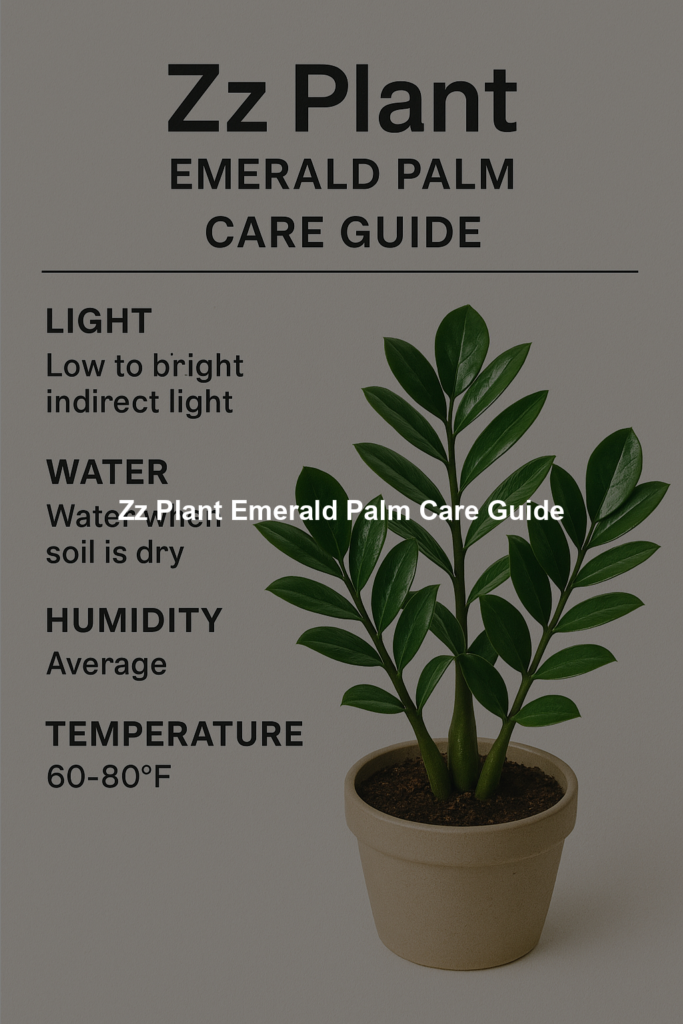
Zz Plant Emerald Palm Care Guide is essential reading for anyone seeking a resilient, architectural foliage piece that harmonizes with modern interiors. With its glossy, lance‑shaped leaves and tolerance for low‑light environments, the Zz Plant offers both aesthetic impact and low maintenance, provided its cultural needs are met with precision.
Key Takeaways
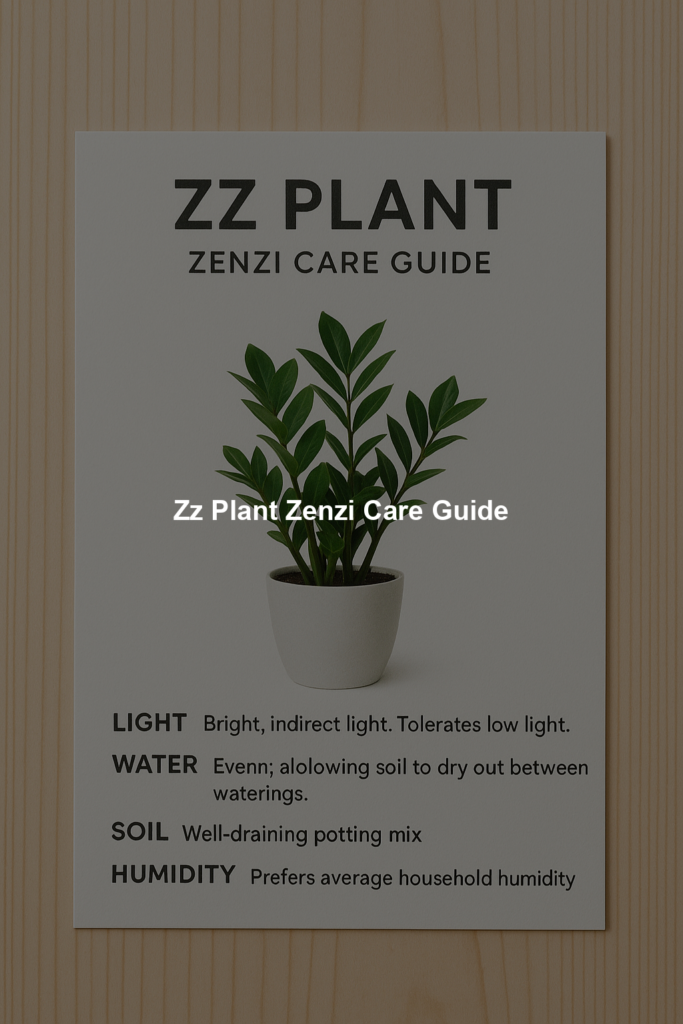
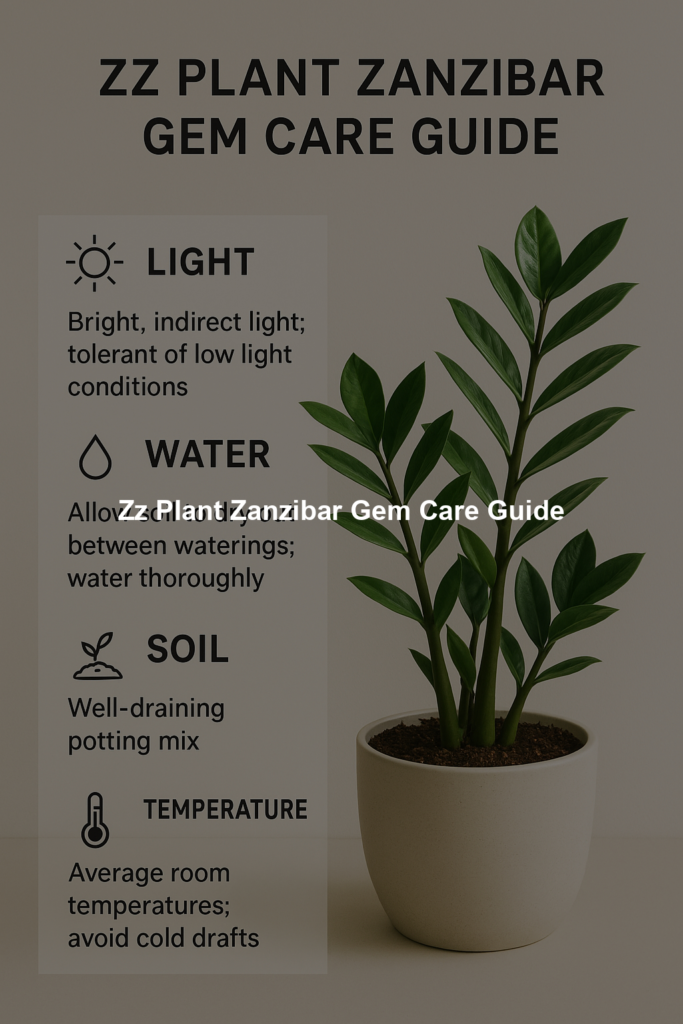
- Light: Bright, indirect light maximizes leaf variegation; tolerate low light but growth slows.
- Water: Allow topsoil to dry between waterings; over‑watering leads to root rot.
- Soil: Well‑draining, aerated mix with peat, perlite, and bark is optimal.
- Temperature & Humidity: 65–80 °F (18–27 °C) and moderate humidity; avoid drafts.
- Maintenance: Minimal pruning; repot every 2–3 years to refresh substrate.
Understanding the Importance of Zz Plant Emerald Palm Care Guide
The Zz Plant, scientifically Zamioculcas zamiifolia, functions as a natural air purifier and visual anchor in interior landscapes. Mastery of its care parameters ensures longevity, prevents common physiological stress, and preserves the plant’s signature deep‑green foliage. For professional designers, a healthy Zz Plant enhances spatial perception, offering vertical texture without demanding constant oversight.
Expert Tips for Zz Plant Emerald Palm Care Guide
Successful cultivation hinges on balancing moisture retention with adequate aeration. Incorporate a ceramic pebble layer at the pot base to improve drainage while retaining humidity near the roots. When watering, employ the “finger test”: insert a finger 2 cm into the substrate; if it feels dry, water thoroughly until excess exits drainage holes. Seasonal adjustments—reducing water frequency during winter dormancy—align with the plant’s reduced metabolic activity.
Zz Plant Emerald Palm Care Guide
Light Requirements
Position the plant near an east‑ or north‑facing window where filtered sunlight reaches the foliage. Direct midday sun can scorch the leaves, producing brown tips, while deep shade may cause elongation and loss of vigor. For office environments lacking natural light, supplement with a 4000 K LED grow light set on a 12‑hour photoperiod.
Watering Protocol
The rhizomatous tuber stores water; therefore, the Zz Plant is forgiving of occasional dry periods. Water every 10‑14 days in summer, extending to 4‑6 weeks during cooler months. Use room‑temperature water to avoid shocking the root system, and empty any saucer promptly to prevent standing water.
Soil Composition
A proprietary cactus mix can be too coarse; instead blend 40 % peat moss, 30 % perlite, and 30 % fine pine bark. This combination offers acidity (pH 5.5–6.5) conducive to nutrient uptake while maintaining porosity. Incorporate a slow‑release balanced fertilizer at planting, then switch to a diluted liquid feed quarterly.
Temperature & Humidity Management
Ideal ambient temperatures range from 18 °C to 27 °C. Avoid exposure below 10 °C, as cold stress manifests as leaf discoloration. Though the plant tolerates average household humidity, supplemental misting or a tabletop humidifier benefits growth during winter heating.
Potting and Repotting
Select containers with multiple drainage holes and a diameter no more than 2 inches larger than the current pot. In spring, gently remove the plant, shake off old substrate, and trim any decayed rhizome segments before placing in fresh mix. This practice prevents compaction and encourages new root emergence.
Pruning and Aesthetic Shaping
Remove yellowed or damaged leaves at the base using sterilized pruning shears to curb pathogen entry. For design purposes, thin out lower foliage to elevate the visual crown, creating a tiered effect that complements contemporary décor.
Propagation Techniques
Division is the most reliable method: during repotting, separate healthy rhizome sections with at least two growth buds each. Plant divisions in identical soil mix and keep them in bright, indirect light. Rooting occurs within 4‑6 weeks; avoid fertilizing until new growth stabilizes.
Pest and Disease Prevention
Spider mites, mealybugs, and scale insects are the primary concerns. Conduct bi‑monthly inspections, focusing on leaf axils and undersides. Treat infestations with neem oil or insecticidal soap, applying at least two applications spaced one week apart. Root rot, caused by Phytophthora spp., is mitigated by strict adherence to the watering protocol and ensuring pot drainage.
Indoor Styling Applications
The Zz Plant’s upright habit makes it ideal for corner accent pieces, floor‑standing statements, or as a complement to taller palms. Pair with contrasting textures such as succulents in terracotta or metallic planters to accentuate its glossy foliage. In open‑plan offices, arrange in clusters of three to create a unified green backdrop without overwhelming the space.
Zz Plant Emerald Palm Care Guide
Seasonal Adjustments
During the plant’s dormant phase (late autumn to early winter), reduce watering frequency and halt fertilizer applications. This mimics natural cyclical stress, allowing the tuber to conserve resources. Conversely, in late spring, increase feeding to a half‑strength balanced solution to support vigorous leaf production.
Monitoring Plant Health
Implement a quarterly health audit: assess leaf coloration, firmness, and growth rate. Document observations in a care log to correlate environmental changes with plant response. Early detection of stress signs—such as limp leaves or brown spotting—allows prompt corrective action, preserving the plant’s ornamental value.
Integration with Smart Home Systems
Modern horticulture benefits from IoT sensors that track soil moisture, temperature, and ambient light. Pair a moisture sensor with an automated drip system calibrated to deliver 30 ml of water when the substrate moisture falls below 30 %. Integration reduces human error and standardizes care across multiple locations.
FAQ
How often should I water my Zz Plant Emerald Palm in winter?
During winter, the plant’s metabolic rate declines, requiring less frequent watering. Allow the top 2–3 cm of soil to dry completely before each application, typically every 4–6 weeks. Over‑watering at this stage is the most common cause of root rot.
Can the Zz Plant tolerate direct sunlight?
While the Zz Plant can endure brief periods of direct sunlight, prolonged exposure, especially during midday, can scorch the leaves, producing brown edges and a desiccated appearance. Position the plant in bright, indirect light for optimal foliage health.
What soil mix is best for preventing root rot?
A well‑draining medium composed of peat moss, perlite, and fine pine bark (40 %/30 %/30 %) provides adequate aeration while retaining sufficient moisture. Ensure the pot has ample drainage holes, and avoid heavy garden soils that retain water.
How do I propagate my Zz Plant Emerald Palm effectively?
Division remains the most reliable propagation method. During repotting, separate healthy rhizome sections with at least two growth buds, plant them in fresh, airy substrate, and maintain consistent, moderate humidity. New shoots typically emerge within one month.
What are the signs of pest infestation on a Zz Plant?
Typical indicators include fine webbing, white cottony clusters (mealybugs), or tiny, mobile specks (spider mites) on leaf undersides. Early detection involves regular visual inspections, especially in low‑air‑flow environments. Prompt treatment with neem oil mitigates spread.
Is fertilizer necessary for a mature Zz Plant Emerald Palm?
Fertilization supports vigorous growth but is not mandatory for mature plants maintained under optimal light and water conditions. Apply a balanced, water‑soluble fertilizer at half strength quarterly during the active growing season (spring–summer). Reduce or cease feeding in autumn and winter.
How can I improve humidity for my Zz Plant in a dry office?
Deploy a tabletop humidifier set to maintain 45–55 % relative humidity, or place the pot on a tray filled with pebbles and water, ensuring the pot base does not sit in standing water. Grouping multiple plants together also creates a micro‑environment with higher ambient humidity.