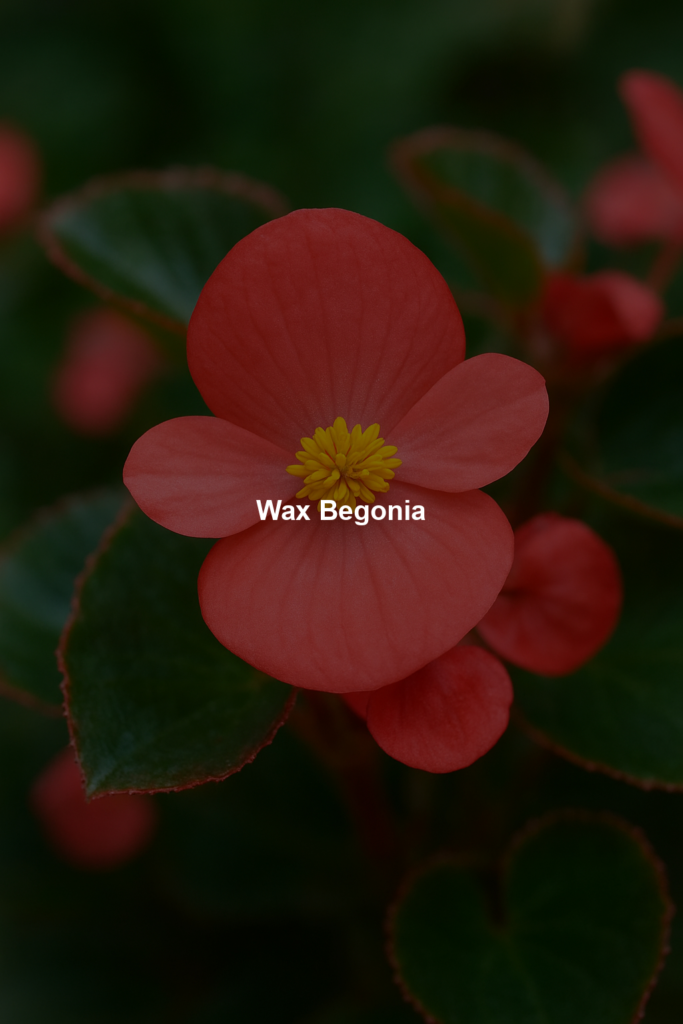
Wax Begonia is celebrated for its glossy foliage and abundant, single‑petaled blossoms that thrive in a range of interior and garden settings. As a horticulturist with over fifteen years of specialization, I provide a technical overview that addresses both the science of cultivation and the aesthetics of design.
Key Takeaways
- Wax Begonia prefers bright, indirect light and well‑draining, slightly acidic media.
- Consistent moisture without waterlogging promotes steady growth and prolific flowering.
- Fertilize bi‑weekly with a balanced, water‑soluble formula during the active growing season.
- Pinch back stems to encourage compact, bushier habit suitable for containers and borders.
- Monitor for common pests such as whiteflies and spider mites; early intervention safeguards plant vigor.
Understanding the Importance of Wax Begonia
Wax Begonia occupies a unique niche between ornamental foliage plants and flowering annuals, offering year‑round foliage interest coupled with seasonal color bursts. Its waxy leaves reflect excess light, reducing leaf temperature and minimizing transpiration stress in warm indoor environments. This physiological adaptation makes the species a reliable choice for spaces with fluctuating temperature regimes, such as open‑plan offices or conservatory benches. Moreover, the plant’s ability to be trained into hedges, bonsai‑style forms, or cascading containers expands its utility across modern interior garden design schemes.
Expert Tips for Wax Begonia
Successful cultivation begins with substrate selection. A loam‑based mix amended with perlite and peat moss at a ratio of 2:1:1 ensures aeration while retaining sufficient moisture. Prior to planting, soak the root ball in a dilute kelp extract for 30 minutes to stimulate root development. During the vegetative phase, maintain ambient temperatures between 65 °F and 78 °F (18 °C–26 °C) and humidity levels of 50‑70 % to imitate the plant’s native tropical understory. When transitioning the plant outdoors in spring, harden it off gradually over ten days, incrementally increasing sun exposure to avoid leaf scorch.
History and Breeding of Wax Begonia
Wax Begonia (Begonia × semperflorens-cultorum) originated from hybridization efforts in the early 19th century, primarily between Begonia boliviensis and Begonia coccinea. Breeders selected for persistent flowering, compact growth, and the characteristic waxy leaf surface. Modern cultivars, such as ‘Silver Queen’ and ‘Rosebud’, display an expanded palette of pink, red, and white blooms while retaining the low‑maintenance traits prized by commercial growers. Genetic studies reveal that the waxy cuticle is governed by a suite of cutin synthase genes, offering potential for further enhancement through marker‑assisted selection.
Botanical Characteristics
Wax Begonia is a herbaceous perennial that typically reaches 12‑18 inches (30‑45 cm) in height when cultivated in containers. Leaves are ovate to elliptic, measuring 3‑5 inches (7‑13 cm) long, with a distinct glossy surface that repels dust. Flowers emerge from axillary buds, each consisting of a single, cup‑shaped petal surrounded by four narrow sepals. The inflorescence is usually a solitary flower per stem, though double‑petaled mutants have been introduced for ornamental interest. The plant’s root system is fibrous, lacking a taproot, which facilitates repotting and container landscaping.
Soil and Light Requirements
Optimal growth occurs in a substrate with a pH of 5.5‑6.5. While Wax Begonia tolerates partial shade, exposure to at least four hours of filtered morning light maximizes floral production. Direct midday sun can cause leaf bronzing, especially in low‑humidity environments. For indoor installations, place the plant near east‑facing windows or use sheer curtains to diffuse harsh rays. When grown outdoors, a shaded border or understorey location under taller shrubs provides the ideal dappled illumination.
Watering and Fertilization Protocols
Watering should emulate the plant’s native moisture regime: keep the medium uniformly moist but never saturated. Employ the “finger test” to assess surface dryness; water when the top ½ inch feels dry to the touch. During the bloom period, supplement with a bloom‑boosting fertilizer containing higher phosphorus (e.g., 10‑30‑20) applied at half the recommended concentration to avoid nutrient burn. Reduce feeding in late autumn as the plant enters dormancy, and cease watering completely for a brief period to encourage leaf senescence before winter storage.
Propagation Techniques
Wax Begonia propagates readily through stem cuttings. Select semi‑hardwood shoots of 4‑6 inches (10‑15 cm) length, remove the lower leaves, and dip the cut end in a 0.3 % indole‑3‑butyric acid rooting hormone. Place the cutting in a sterile, mist‑filled propagation tray under 70 % humidity and indirect light. Roots typically develop within 10‑14 days. For mass production, tissue culture offers rapid multiplication, though strict aseptic conditions and precise growth regulator balances are essential to maintain cultivar fidelity.
Pests and Diseases Management
The most prevalent pests include whiteflies, mealybugs, and spider mites. Implement an integrated pest management (IPM) program: begin with cultural controls such as adequate airflow and removal of debris, followed by biocontrol agents like Encarsia formosa for whiteflies. If infestation persists, apply a neem oil spray at 0.5 % concentration, ensuring thorough coverage of leaf undersides. Fungal diseases, such as powdery mildew and botrytis, thrive in excess humidity; employ a fungicidal spray containing sulfur or copper when early signs appear, and adjust watering practices to reduce leaf wetness.
Design Applications and Styling Ideas
Wax Begonia’s sleek foliage makes it an excellent accent in minimalist interiors. Pair a single large specimen with a ceramic planter of neutral tone to accentuate the plant’s sheen. In layered container gardens, combine the begonia with low‑light tolerant ferns and trailing pothos for a tiered visual effect. For outdoor borders, plant in groups of three to create a subtle wave of color; intersperse with ornamental grasses to add texture contrast. Seasonal redesigns can substitute cultivars with varying flower hues to maintain fresh aesthetics throughout the year.
Seasonal Care Calendar
- Late Winter: Inspect for cold damage; prune dead foliage and apply a slow‑release fertilizer at 5 g m⁻².
- Early Spring: Gradually increase watering frequency; begin hardening off outdoor plants.
- Mid‑Spring to Early Summer: Full light exposure, regular fertilization, and weekly pest scouting.
- Late Summer: Reduce nitrogen feed, increase irrigation to counter heat stress, and remove spent blooms.
- Autumn: Cut back growth to half height, lower watering, and transition to a dormancy regimen.
- Winter: Maintain indoor temperature above 55 °F (13 °C); provide minimal moisture to prevent desiccation.
FAQ
How much light does Wax Begonia need for optimal blooming?
Wax Begonia thrives under bright, indirect light. Position the plant where it receives at least four hours of filtered sunlight daily, such as near an east‑facing window or beneath a sheer curtain. Direct midday sun can scorch the leaves and reduce flower quality, while insufficient light may delay or inhibit blooming.
What soil pH range is ideal for Wax Begonia?
The plant prefers slightly acidic to neutral soils, with a pH ranging from 5.5 to 6.5. Testing the medium with a calibrated pH meter before planting ensures optimal nutrient availability. Amend the substrate with peat moss or elemental sulfur if the pH exceeds the desired range.
Can Wax Begonia be grown successfully in low‑humidity indoor environments?
Yes, but supplemental humidity is advisable. Utilize a tabletop humidifier, place the pot on a pebble tray filled with water, or mist the foliage lightly once daily. Maintaining ambient humidity between 50 % and 70 % mimics the plant’s native tropical understory, reducing stress and preventing leaf curl.
What are the most effective methods for controlling spider mites on Wax Begonia?
Begin with cultural strategies: increase air circulation, avoid overhead watering, and remove heavily infested leaves. For chemical control, apply a horticultural oil or insecticidal soap at a concentration of 2‑3 %, ensuring thorough coverage of leaf undersides. Repeat applications every seven days until populations subside.
How should Wax Begonia be pruned to encourage a bushier habit?
Pinch back the terminal buds when the plant reaches 6‑8 inches (15‑20 cm) in height. This stimulates lateral bud development, resulting in a denser, more compact form. Conduct periodic pruning after each flowering cycle to maintain shape and prevent legginess, especially in container culture.