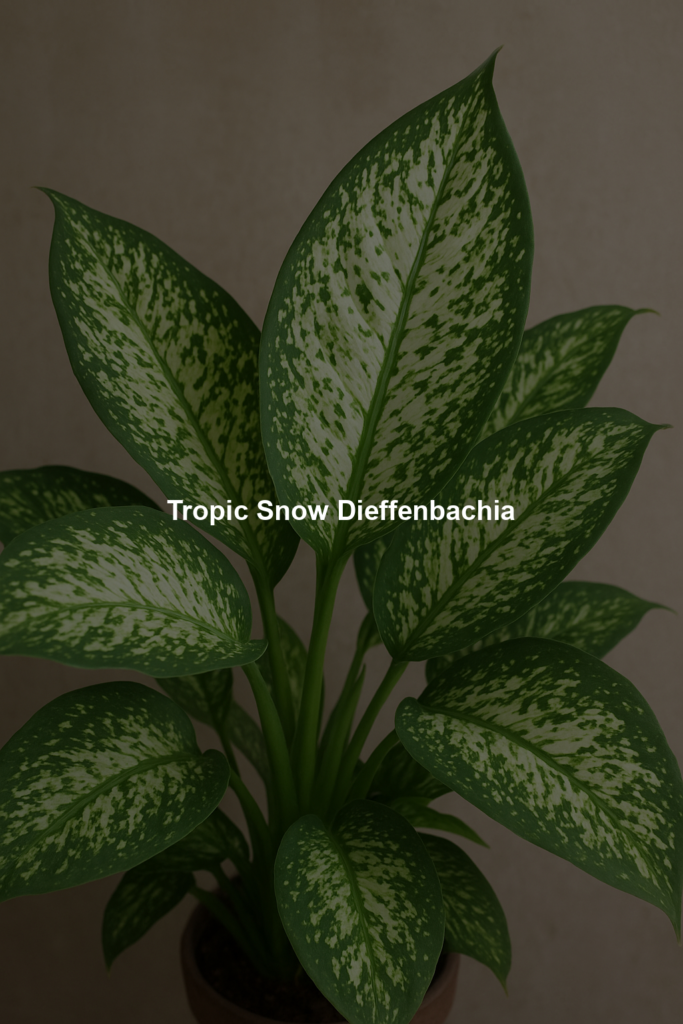
Tropic Snow Dieffenbachia stands out among ornamental foliage for its crisp, variegated leaves and forgiving nature, making it a staple of sophisticated interior gardens. As a horticulturist with over fifteen years of experience, I observe that proper cultural practices unlock its full decorative potential while minimizing the risk of toxicity.
Key Takeaways
- Light: Bright, indirect illumination promotes optimal variegation without scorching.
- Water: Consistent moisture with excellent drainage prevents root rot.
- Temperature: Prefers 65–80 °F (18–27 °C); avoid drafts.
- Propagation: Stem cuttings root quickly in a humid environment.
- Design: Works well in statement pots, as a backdrop, or in mixed foliage arrangements.
Understanding the Importance of Tropic Snow Dieffenbachia
The plant’s architectural foliage adds height and texture, bridging the gap between leafy vines and upright palms. Its variegated pattern, a contrast of ivory and deep green, creates visual interest without demanding excessive maintenance. In commercial interiors, the species is valued for its ability to soften hard lines while contributing a sense of calm through its muted palette.
From a physiological perspective, Tropic Snow Dieffenbachia possesses calcium oxalate crystals, a natural defense that deters herbivory. While this renders the plant mildly toxic if ingested, the same trait enhances its resilience to pest pressure, reducing the need for chemical interventions in well‑managed environments.
Expert Tips for Tropic Snow Dieffenbachia
Select a container with drainage holes and a size that allows the root ball to expand by 2–3 inches per year. Fill with a peat‑based potting mix amended with perlite or orchid bark to mimic its native epiphytic habitat. Position the pot near a north‑ or east‑facing window; a sheer curtain diffuses harsh midday rays while preserving bright conditions.
Water when the top inch of substrate feels dry, using lukewarm water to avoid temperature shock. Apply a balanced, water‑soluble fertilizer at half the recommended strength every six weeks during the active growth period (spring through early fall). Reduce feeding in winter when growth naturally slows.
Cultivation Requirements
Light and Temperature
Tropic Snow Dieffenbachia thrives under bright, filtered light. Direct sun can bleach the ivory margins, whereas low light encourages leggy growth and diminishes variegation intensity. Maintain ambient temperatures between 65 °F and 80 °F; night dips below 55 °F may cause leaf discoloration.
Watering Regime
Aim for a moisture level that keeps the substrate evenly damp but never saturated. Overwatering leads to rhizome rot, a common failure point in indoor settings. Employ a moisture meter or finger test to gauge the appropriate watering interval, typically every 5–7 days in moderate humidity.
Soil Composition
A well‑draining medium composed of 40 % peat moss, 30 % pine bark, and 30 % perlite or coarse sand provides both aeration and moisture retention. The organic component supplies the slight acidity (pH 5.5–6.5) favored by the species, supporting nutrient uptake and healthy leaf development.
Propagation Techniques
Stem Cutting
Harvest a 6–8 inch cutting with at least two nodes during the spring flush. Remove lower leaves, dip the cut end in a powdered rooting hormone, and place in a humidity dome with a peat‑lite mix. Expect root emergence within 10–14 days under temperatures of 70–75 °F.
Division
When the plant outgrows its container, gently loosen the root ball and separate distinct crowns, each with a healthy root system. Re‑pot divisions immediately in fresh substrate, maintaining similar light and watering conditions to minimize shock.
Pest and Disease Management
Common Insects
Spider mites, mealybugs, and aphids occasionally infest indoor foliage. Regular inspection of leaf undersides and foliar cleaning with a mild neem oil solution curtails infestations. Early detection prevents secondary fungal issues that often follow honeydew deposits.
Fungal Issues
Root rot and leaf spot arise from excess moisture and poor air circulation. Employ a fungicidal spray containing copper or horticultural oil at the first sign of discoloration. Adjust watering frequency and increase ambient airflow with a gentle oscillating fan.
Design Integration
Placement in Open‑Plan Spaces
Tropic Snow Dieffenbachia functions as a focal point when positioned near entryways or in reception areas where natural light is abundant. Its upright growth habit complements low‑lying succulents, creating layered visual interest without competing for space.
Pairing with Complementary Species
Combine the plant with deep‑green foliage such as Sansevieria or Monstera for contrast, or with pastel‑toned foliage like Calathea for a harmonious palette. The neutral variegation allows it to serve both as a backdrop and an accent, depending on surrounding décor.
Maintenance Schedule
Pruning and Grooming
Remove damaged or yellowing leaves promptly to maintain aesthetic quality and reduce pathogen load. Trim excess growth using sterile shears, encouraging a bushier habit and preventing unwieldy elongation beyond the intended design frame.
Fertilization Cycle
Adopt a bi‑monthly feeding routine during spring and summer, applying a balanced NPK 20‑20‑20 solution at one‑quarter strength. Transition to a dormant‑phase regimen in late autumn, offering only a light dose of micronutrients to sustain leaf coloration through winter.
FAQ
How often should I repot Tropic Snow Dieffenbachia?
Repotting is advisable every 2–3 years, or when the root mass fills the container, presenting a “pot‑bound” condition. Choose a pot one size larger and refresh the growing medium to sustain nutrient availability and prevent waterlogging.
Can Tropic Snow Dieffenbachia tolerate low light environments?
While the plant can survive in lower light, variegation fades and foliage becomes elongated. For optimal aesthetic results, provide bright, indirect light; a supplemental LED grow light can mitigate deficits in window‑scarce interiors.
What precautions are necessary for households with pets or children?
All parts contain calcium oxalate crystals; ingestion may cause oral irritation and swelling. Place the plant out of reach of curious pets and small children, and educate household members on its toxic nature while emphasizing its ornamental value.
Is it possible to grow Tropic Snow Dieffenbachia outdoors?
In USDA zones 10–11, the species can be cultivated outdoors in shaded, humid microclimates. Ensure protection from direct midday sun and strong winds, and provide soil with excellent drainage to emulate its native understory conditions.
How do I increase humidity for optimal growth?
Employ a tabletop humidifier, group plants together, or situate the pot on a pebble tray filled with water. Aim for relative humidity levels of 50–70 %, which support stomatal function and prevent leaf margin crisping.