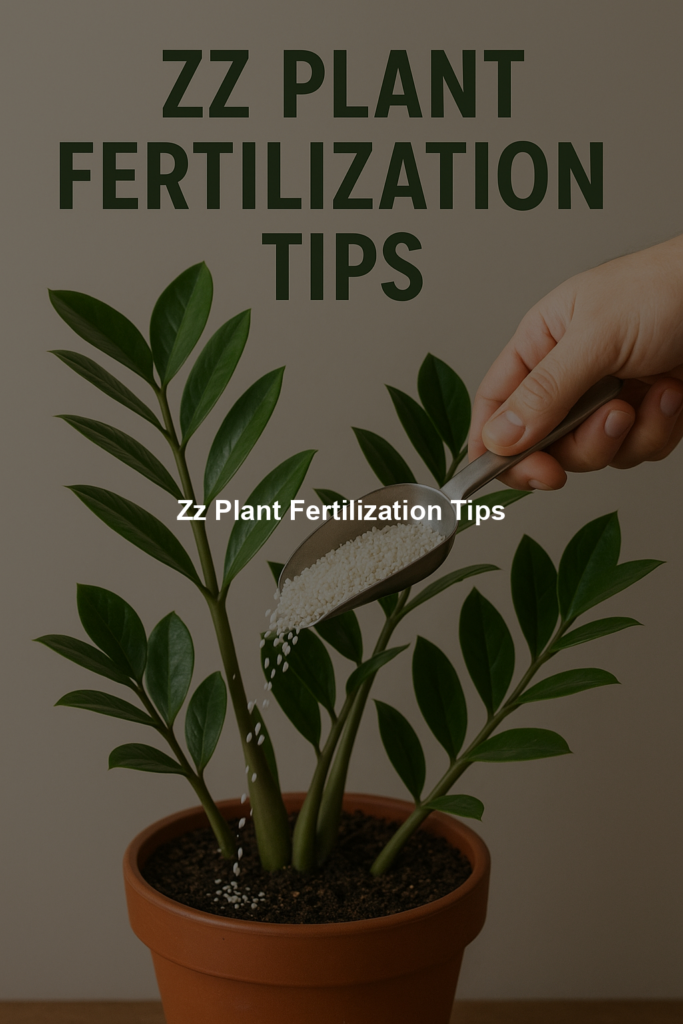
Zz Plant Fertilization Tips are essential for sustaining the vigor of Zamioculcas zamiifolia, especially when the plant is confined to indoor environments where soil nutrients deplete quickly. A disciplined fertilization schedule, informed by the plant’s slow‑growth habit and tolerance for low‑light conditions, prevents nutrient deficiencies without encouraging excessive leaf proliferation. This article delivers a structured, evidence‑based approach to feeding ZZ plants, integrating horticultural science with interior design considerations.
Key Takeaways
- Apply a balanced, water‑soluble fertilizer at half the recommended strength during the active growth phase.
- Adjust feeding frequency to seasonal light exposure; reduce in winter when growth naturally slows.
- Opt for organic micronutrient enrichments to support leaf gloss and root health without buildup.
- Monitor soil pH and leach salts annually to maintain optimal nutrient availability.
- Diagnose common over‑fertilization signs early to preserve foliage integrity.
Zz Plant Fertilization Tips
Understanding the physiological demands of the ZZ plant establishes a solid foundation for any fertilization program. The species stores water and nutrients in its rhizomes, which explains its modest nutrient uptake. Consequently, a lightweight feeding regimen—typically once every eight to twelve weeks—aligns with the plant’s intrinsic growth rhythm. Over‑fertilizing can disrupt the rhizome’s storage capacity, leading to leaf yellowing and root burn.
Understanding the Importance of Zz Plant Fertilization Tips
Nutrient management directly influences the aesthetic qualities prized by interior designers: deep green foliage, subtle variegation, and a sturdy upright habit. Phosphorus promotes robust root expansion, while potassium enhances leaf turgor and disease resistance. Nitrogen, though essential, must be limited to prevent overly rapid growth that can compromise structural integrity. By calibrating each macro‑nutrient, growers can fine‑tune the visual impact of ZZ plants within contemporary spaces.
Zz Plant Fertilization Tips
When formulating a fertilization schedule, consider the following variables:
Light Exposure
Plants situated near north‑facing windows receive less photosynthetic energy, reducing nutrient assimilation rates. In such low‑light scenarios, a quarter‑strength liquid fertilizer applied every ten weeks suffices. Conversely, bright indirect light justifies a half‑strength dosage at eight‑week intervals.
Soil Composition
A well‑draining substrate composed of peat, perlite, and orchid bark mimics the plant’s native rocky habitats. Incorporating a slow‑release granular fertilizer at planting time provides a baseline of nutrients, which can be complemented by periodic liquid feeds. Regularly test the substrate’s pH; an optimal range of 6.0–6.5 maximizes nutrient uptake.
Seasonal Adjustments
During the dormant winter months, metabolic activity diminishes. Cease fertilization entirely for 4–6 weeks to avoid residue accumulation. Resume feeding in early spring as new growth emerges, adhering to the reduced‑strength protocol outlined above.
Nutrient Profiles and Formulations
Selecting the appropriate fertilizer formulation is as critical as timing. Below is a concise guide to commonly available options:
Balanced 20‑20‑20 Water‑Soluble Fertilizer
Provides equal proportions of nitrogen, phosphorus, and potassium, ideal for maintaining overall health. Dilute to 0.5× strength for ZZ plants to prevent nitrogen excess.
High‑Phosphorus 10‑30‑20 Formula
Supports rhizome development and root vigor, particularly useful for repotted specimens or those in larger containers. Apply sparingly, as excess phosphorus can inhibit micronutrient absorption.
Micronutrient‑Enriched Organic Teas
Composts or seaweed extracts supply trace elements like iron, magnesium, and zinc. These teas can be incorporated monthly at a 1:20 dilution, promoting leaf sheen without altering the macro‑nutrient balance.
Organic Versus Synthetic Fertilizers
Both categories have merits, yet the choice often hinges on design philosophy and indoor air quality considerations. Synthetic fertilizers deliver precise N‑P‑K ratios, facilitating consistent results. Organic alternatives, however, improve soil structure and microbiome diversity, which can enhance the long‑term resilience of ZZ plants in container settings. When using organic products, adhere to the same reduced‑strength principle to avoid over‑feeding.
Troubleshooting Common Fertilization Issues
Identifying symptoms early mitigates long‑term damage.
Leaf Yellowing (Chlorosis)
Often indicates nitrogen deficiency or salt buildup. Flush the soil with a generous volume of water and resume feeding at half the previous concentration.
Brown Leaf Margins
Suggestive of potassium imbalance or dehydration. Verify that watering schedules align with the plant’s moisture needs and adjust potassium‑rich feedings accordingly.
Stunted Growth
May result from excessive fertilizer limiting root expansion. Conduct a soil leach to remove excess salts, then let the plant recover in low‑light conditions before reintroducing a mild feeding regimen.
Container Management and Fertilizer Leaching
Containers restrict root volume, intensifying the impact of fertilizer residues. Employ a “bottom‑up” watering method—allowing the pot to sit in a saucer of nutrient‑free water for five minutes—to promote uniform leaching. Repeat this process bi‑monthly to prevent salt accumulation while preserving essential nutrients.
Integrating ZZ Plants into Design Schemes
From minimalist office desks to biophilic living rooms, the ZZ plant’s glossy foliage complements a range of aesthetics. Proper fertilization ensures that the plant retains its characteristic deep green hue, enhancing contrast against neutral palettes. Pairing appropriately fed ZZ specimens with sleek metal planters or natural woven baskets reinforces the intended design narrative.
Advanced Fertilization Strategies
For horticulturists seeking precision, consider the following:
Controlled‑Release Granules
Embed slow‑release pellets at a 10‑gram per kilogram soil rate during potting. These granules liberate nutrients over six months, reducing the need for liquid applications.
Foliar Feeding
Apply a dilute micronutrient spray (e.g., iron chelate at 0.1% concentration) during peak growth periods to address transient deficiencies without disturbing soil balance.
Digital Soil Sensors
Integrate moisture and EC (electrical conductivity) sensors to monitor nutrient saturation in real time. Automated alerts can guide timely adjustments, particularly in climate‑controlled interiors.
Maintenance Schedule Overview
| Season | Light Level | Fertilizer Type | Dilution | Frequency |
|---|---|---|---|---|
| Spring | Bright indirect | Balanced 20‑20‑20 | ½ strength | Every 8 weeks |
| Summer | Moderate indirect | High‑phosphorus 10‑30‑20 | ¼ strength | Every 10 weeks |
| Autumn | Low to moderate | Organic tea | 1:20 | Monthly |
| Winter | Low | None (flush only) | — | N/A |
FAQ
How often should I fertilize my ZZ plant in a low‑light office?
In low‑light conditions, a quarter‑strength liquid fertilizer applied every ten weeks provides sufficient nutrients without encouraging rapid, weak growth. Ensure the potting mix remains well‑draining and monitor for any signs of over‑feeding.
Can I use a generic houseplant fertilizer for ZZ plants?
Generic houseplant fertilizers often contain higher nitrogen levels than ZZ plants require. If you choose to use one, dilute it to ½ strength or less and limit applications to the active growing season to avoid nitrogen‑induced leaf softening.
What are the signs of over‑fertilization in a ZZ plant?
Typical symptoms include yellowing or browning leaf margins, a soft, mushy rhizome, and a sudden loss of leaf rigidity. Immediate corrective action involves flushing the soil with ample water and suspending fertilization until recovery.
Is compost an appropriate fertilizer for ZZ plants in containers?
Compost supplies organic matter and micronutrients that improve soil texture, but it should be well‑aged to prevent ammonia burn. Incorporate compost at a ratio of no more than 20% of the total potting medium and follow with reduced‑strength liquid feeds.
How does soil pH affect fertilizer efficacy for ZZ plants?
ZZ plants thrive in slightly acidic to neutral soils (pH 6.0–6.5). At this range, macronutrients remain soluble and readily absorbed. If the pH drifts above 7.0, phosphorus and micronutrients become less available, necessitating pH correction before fertilization.