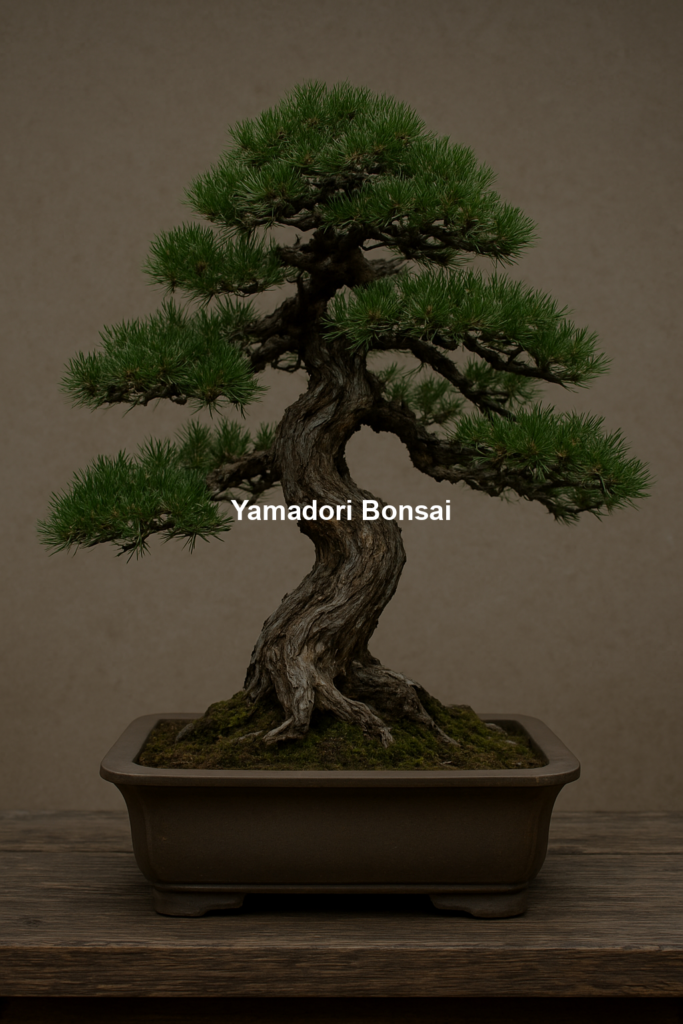
Yamadori Bonsai, the practice of transplanting wild‐grown trees into miniature form, bridges natural ecology with refined design. Originating in Japan’s mountain forests, this technique offers seasoned growers a direct link to mature genetics, allowing the creation of age‑defying specimens that resonate with authenticity and depth.
Key Takeaways
- Wild specimens provide innate aged bark, branch structure, and seasonal rhythm.
- Correct timing of collection and root preservation is critical to survival.
- Soil composition, moisture balance, and low‑stress training yield the healthiest bonsai.
- Species selection must align with climate, indoor lighting, and stylistic intent.
- Ongoing cultural vigilance prevents decline and encourages natural development.
Yamadori Bonsai
The term “Yamadori” literally translates to “mountain bird,” a metaphor for the collector who seeks out hidden natural gems. The essence of Yamadori Bonsai lies in capturing a tree that has already endured years—sometimes centuries—of wind, snow, and pest pressure. These trees possess a mature ramification pattern that, when refined, conveys a narrative impossible to achieve with nursery‑grown stock.
Harvesting a Yamadori specimen demands precision. The collector must assess root ball size, bark health, and branch orientation before removal. A key consideration is the tree’s seasonal cycle; most Japanese species are best collected during dormancy, while temperate deciduous trees benefit from late‑summer pruning when sap flow is reduced. Once felled, the root system should be kept moist and protected from temperature extremes to mitigate transplant shock.
Understanding the Importance of Yamadori Bonsai
Yamadori Bonsai delivers irreplaceable authenticity. The aged bark texture, naturally occurring dead wood, and pre‑formed branch angles provide a visual complexity that can take decades of patient cultivation to emulate artificially. For designers, such features allow seamless integration into interior settings where a sense of history enhances spatial storytelling. Moreover, the genetic resilience of wild trees often translates to greater disease resistance, reducing chemical interventions over the lifespan of the bonsai.
From a horticultural perspective, Yamadori Bonsai serves as a living laboratory. Observing how a wild specimen adapts to container life yields insights into root dynamics, water transport, and hormone distribution. These observations inform broader practices in arboriculture and urban landscaping, where containerized trees are increasingly common.
Expert Tips for Yamadori Bonsai
- Site Selection – Choose collection sites with minimal pollutant exposure and stable microclimates. Avoid areas prone to sudden frost or excessive moisture.
- Pre‑Harvest Conditioning – Water the target tree for several days before removal to ensure optimal hydration. This practice reduces desiccation during transport.
- Root Preservation – Trim only injured roots; retain as much fine root mass as possible. Soak the root ball in a solution of diluted humic acid to stimulate regeneration.
- Initial Potting – Use a coarse, well‑draining substrate (e.g., akadama mixed with pumice). Position the tree to honor its natural lean, reinforcing structural integrity with temporary staking.
- Post‑Plant Care – Maintain shaded humidity for the first two weeks, then gradually introduce the tree to its intended lighting regime. Monitor sap flow and adjust watering accordingly.
Soil & Water Management
The foundation of any successful Yamadori Bonsai lies in a balanced substrate. A typical mix combines 40 % akadama, 30 % pumice, and 30 % lava rock, providing both moisture retention and aeration. For conifers, increase the proportion of pumice to encourage faster drainage and prevent root rot.
Watering must mimic the tree’s natural rhythm. Early spring and autumn demand gentle, frequent irrigation to replace evaporative loss, while summer calls for deep soakings that allow excess water to drain fully. Employ a moisture meter to avoid guesswork; the substrate should feel damp but never soggy.
Styling & Wiring Techniques
Yamadori Bonsai’s inherent branch architecture often dictates the final style. Common forms include Shakan (slanting trunk) and Jō (formal upright). When wiring, use annealed copper for delicate branches and stainless steel for thicker limbs. Begin with low tension, checking weekly for signs of bark indentation. Remove wires before they become embedded, typically within 6–12 months, to preserve vascular flow.
The practice of sabaki—deliberate trimming to create natural flow—works exceptionally well with wild stock. Identify the tree’s dominant growth direction, then prune competing shoots to accentuate asymmetry. This approach respects the tree’s origin while shaping a composition suitable for modern interiors.
Seasonal Care Calendar
| Season | Primary Tasks |
|---|---|
| Winter | Protect against extreme cold; limit watering; maintain dormancy for deciduous species. |
| Spring | Gradual acclimation to light; begin fertilization with balanced NPK; monitor for early pests. |
| Summer | Increase watering frequency; perform selective pruning; ensure adequate airflow to prevent fungal issues. |
| Autumn | Reduce fertilization; prepare for dormancy by limiting water; conduct final health inspection. |
Adhering to this rhythm respects the tree’s natural phenology, fostering vigor and encouraging the development of fine branchlets.
Species Selection for Interior Display
Not every wild species adapts gracefully to indoor environments. Among the most reliable for interior Yamadori Bonsai are:
- Japanese Maple (Acer palmatum) – Offers striking foliage color and delicate bark. Requires bright, indirect light and moderate humidity.
- Satsuki Azalea (Rhododendron indicum) – Provides vibrant blooms; thrives in filtered light and acidic substrate.
- Chinese Juniper (Juniperus chinensis) – Tolerates lower light levels; ideal for minimalist décor.
- Hinoki Cypress (Chamaecyparis obtusa) – Possesses dense, aromatic foliage; benefits from consistent moisture and cooler temperatures.
Choosing a species aligned with the client’s lighting conditions and aesthetic goals reduces maintenance demands and enhances the longevity of the display.
Pest Management Strategies
Wild trees often carry latent insect populations that can erupt when confined to a pot. Implement integrated pest management (IPM) by first inspecting foliage and roots for aphids, spider mites, and scale insects. Introduce beneficial insects such as Orius spp. and predatory mites where feasible. When chemical treatment is unavoidable, select horticultural oils or neem-based sprays, applying during early morning hours to minimize leaf burn.
Long‑Term Development & Artistic Evolution
Yamadori Bonsai is a living artwork, evolving with each season. Encourage gradual development rather than aggressive shaping. Allow the tree to produce new growth, then selectively prune to guide form. Over time, the trunk will thicken, and the root system will compact, creating a harmonious balance between age and vitality. Documenting progress through annotated photographs aids both the artist and client in appreciating the tree’s narrative arc.
FAQ
How do I identify a suitable Yamadori specimen in the field?
Selection begins with visual cues: mature bark texture, well‑defined branch angles, and a healthy root system. Look for trees that display natural asymmetry and possess a clear direction of growth. Verify that the site offers adequate drainage and minimal exposure to pollutants. Prioritize specimens with minimal signs of disease or insect damage, as these can compromise transplant success.
What is the optimal time of year to collect a Yamadori Bonsai?
The ideal window varies by species. Deciduous trees are commonly harvested during late winter dormancy, when sap flow is minimal, reducing stress on the root system. Evergreen conifers may be collected in early autumn after a period of rain, which ensures sufficient moisture within the roots. Avoid collection during extreme temperatures or heavy rainfall, which can cause root rot or desiccation.
Can Yamadori Bonsai be grown indoors year‑round?
Yes, provided the chosen species tolerates the indoor climate and the grower replicates essential environmental factors. Ensure access to bright, indirect light—supplemented with full‑spectrum LED fixtures if natural illumination is insufficient. Maintain moderate humidity (45‑60 %) and monitor temperature fluctuations to avoid shock. Regular fertilization and careful watering are equally critical to indoor success.
How long does it take for a newly transplanted Yamadori Bonsai to establish?
Root establishment typically requires 6 to 12 months of careful care. During this period, the tree will focus energy on root growth rather than foliage expansion. Signs of successful establishment include steady leaf emergence, balanced moisture uptake, and stable trunk diameter. Patience is essential; premature pruning or aggressive wiring can impede the adjustment process.
What are the most common causes of decline in Yamadori Bonsai, and how can they be prevented?
Decline often stems from improper watering, inadequate lighting, or excessive root confinement. Over‑watering leads to root rot, while under‑watering causes desiccation and leaf drop. To prevent these issues, employ a well‑draining substrate, monitor moisture levels, and adjust watering frequency to seasonal demands. Ensure the bonsai receives sufficient light—both intensity and duration—to support photosynthesis. Periodic repotting, following a 2‑ to 3‑year cycle for younger trees, alleviates root crowding.
Is it legal to collect wild trees for Yamadori Bonsai in my region?
Regulations differ across jurisdictions. Many countries protect native flora under conservation laws that restrict removal without permits. Before collecting, consult local forestry authorities or environmental agencies to obtain required permissions. Respect protected areas, and consider sourcing from regions where sustainable harvesting practices are established. Ethical collection preserves biodiversity and maintains the integrity of the practice.
How do I transition a newly acquired Yamadori Bonsai from outdoor to indoor conditions?
Begin with a gradual acclimation process, moving the tree to a shaded, indoor location for several hours daily, incrementally extending exposure over two weeks. Maintain ambient humidity using a tabletop humidifier or a pebble tray with water. Monitor the foliage for signs of stress—wilting, leaf scorch, or discoloration—and adjust lighting and watering accordingly. Once fully adapted, place the bonsai under appropriate artificial lighting to sustain growth throughout the year.