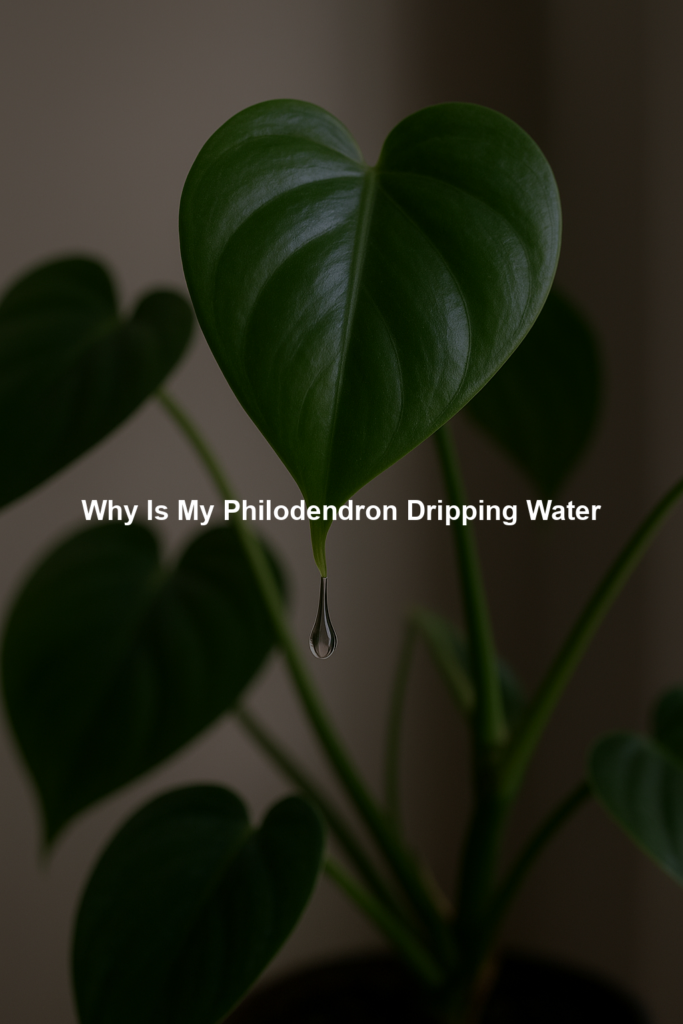
Why is my philodendron dripping water? This question often arises when owners notice clear exudates emerging from leaf veins or the soil surface of their houseplant. Understanding the physiological and environmental triggers behind this phenomenon is essential for maintaining plant health and preventing long‑term stress.
Key Takeaways
- Excessive guttation indicates high root pressure or humidity stress.
- Improper watering schedules can mimic disease‑like symptoms.
- Soil composition and drainage directly affect exudate formation.
- Seasonal temperature shifts amplify stomatal activity.
- A systematic diagnostic routine prevents misidentification.
Why Is My Philodendron Dripping Water
Philodendrons possess sophisticated water regulation mechanisms that can produce visible droplets, commonly referred to as guttation. Guttation occurs when root pressure forces water through specialized leaf structures called hydathodes, releasing a clear fluid that may contain dissolved minerals. This process is most active during nighttime or early morning when transpiration is low and atmospheric humidity is high.
Understanding the Importance of Why Is My Philodendron Dripping Water
Recognizing guttation as a symptom rather than a disease shifts the management approach from chemical intervention to cultural refinement. Persistent dripping can signal an imbalance in the plant’s water uptake versus transpiration, potentially leading to nutrient lockout, fungal growth, or root rot if conditions remain unchecked. Therefore, accurate interpretation of the symptom safeguards both aesthetic presentation and plant vigor.
Expert Tips for Why Is My Philodendron Dripping Water
- Monitor humidity – Aim for 50‑60 % relative humidity in the growing area; use a hygrometer for precision.
- Adjust watering – Allow the top 2‑3 cm of the substrate to dry before re‑watering; avoid water‑logged conditions.
- Optimize pot drainage – Ensure pot holes are unobstructed and incorporate coarse quartz or perlite to promote aeration.
- Regulate temperature – Maintain daytime temperatures of 18‑24 °C; sudden night‑time drops can trigger guttation.
- Inspect leaf edges – Clean any exudate with a damp cloth to prevent fungal spores from settling.
Physiological Mechanisms Behind Guttation
Stomatal Activity and Hydathodes
Stomata close during the night, reducing transpiration. Simultaneously, root pressure builds as soils remain moist, pushing water upward. Hydathodes, located at leaf margins, serve as release valves for this pressure, secreting droplets that may appear as “dripping water.”
Root Pressure Dynamics
Root pressure develops from osmotic gradients generated by active ion transport in root cells. When soil water potential exceeds leaf water potential, the resulting pressure can exceed 0.1 MPa, sufficient to force water out of hydathodes. This is amplified in fertilized soils where ion concentration is higher.
Environmental Factors Influencing Dripping
Ambient Humidity
High relative humidity slows evaporative cooling, allowing guttation fluid to persist on leaf surfaces. In climate‑controlled interiors, humidifiers or misting systems can inadvertently raise humidity beyond optimal levels.
Light Intensity
Low light reduces photosynthetic demand, decreasing transpiration and contributing to water surplus. Position philodendrons near bright, indirect light to balance water use.
Seasonal Temperature Variations
Cooler nights increase the likelihood of guttation as metabolic activity declines. During winter, indoor heating may create dry air, prompting owners to over‑water, which again encourages dripping.
Cultural Practices That Mitigate Excessive Dripping
Soil Composition
A well‑draining medium—typically a blend of peat, pine bark, and perlite—prevents water stagnation. Heavy, compacted soils retain moisture, sustaining root pressure for extended periods.
Water Quality
Hard water introduces calcium and magnesium salts that can accumulate in the substrate, raising osmotic pressure. Using filtered or rainwater reduces these mineral loads, moderating guttation intensity.
Fertilization Regimen
Excessive fertilizer spikes ion concentration, intensifying root pressure. Apply a balanced, water‑soluble fertilizer at half the recommended rate during the active growth phase, and halt feeding in dormant months.
Diagnostic Workflow for Dripping Phenomena
Visual Assessment
Inspect leaves for clear droplets versus sticky, colored exudates. Clear droplets suggest guttation; brown or black residue may indicate sap loss from injury or disease.
Soil Moisture Test
Insert a moisture meter 5 cm deep; readings above 70 % indicate overwatering. Allow the substrate to dry to 30‑40 % before the next watering cycle.
Seasonal Pattern Analysis
Record dripping occurrences over several months. A pattern aligning with cooler, humid evenings confirms physiological guttation rather than pathological causes.
Preventive Maintenance Strategies
- Rotate plant placement quarterly to ensure uniform light exposure.
- Prune excessively long vines to improve air circulation.
- Employ pebble trays with water, but replace water weekly to avoid bacterial growth.
Frequently Overlooked Details
Pot Size Selection
An oversized pot holds excess soil moisture, prolonging root pressure. Choose a container that fits the root ball snugly, typically 2‑3 cm larger in diameter than the root mass.
Leaf Orientation
Leaves facing north receive less light, reducing transpiration and encouraging guttation on those leaves. Reorient the plant to expose all foliage to balanced light.
FAQ
What is the difference between guttation and dew on philodendron leaves?
Guttation is an active process driven by root pressure that releases mineral‑rich water through hydathodes, while dew forms passively from atmospheric condensation. Guttation droplets are usually clearer and may contain trace nutrients, whereas dew is pure water.
Can over‑fertilization cause my philodendron to drip water?
Yes. High concentrations of soluble salts increase osmotic pressure in the root zone, strengthening root‑generated pressure. This can lead to more frequent and larger guttation events, especially when combined with high humidity.
How often should I water my philodendron to avoid dripping?
Water only when the top 2‑3 cm of soil feels dry to the touch. In most indoor environments, this translates to once every 7‑10 days during the growing season and every 10‑14 days in winter, provided adequate drainage is present.
Is it safe to wipe the droplets off my philodendron’s leaves?
Yes. Gently removing droplets with a damp, soft cloth prevents fungal spores from colonizing the leaf surface. Avoid rubbing, which can damage the delicate hydathode tissue.
Could pests be responsible for the watery exudate I see?
Most pests produce sticky, amber‑colored honeydew rather than clear water. If the fluid is clear and appears at leaf margins, guttation is the more likely cause. Nonetheless, inspect leaves for insects such as aphids or scale.
Does potting mix composition affect the frequency of dripping?
A mix with high organic content retains moisture longer, potentially increasing guttation frequency. Incorporating coarse elements like perlite or orchid bark improves aeration and reduces water retention, thereby moderating root pressure.
Should I reduce humidity in my home to stop my philodendron from dripping?
Lowering humidity to a range of 45‑55 % can diminish guttation, but avoid creating excessively dry conditions that stress the plant. Use a hygrometer to monitor levels and adjust humidifiers or ventilation accordingly.