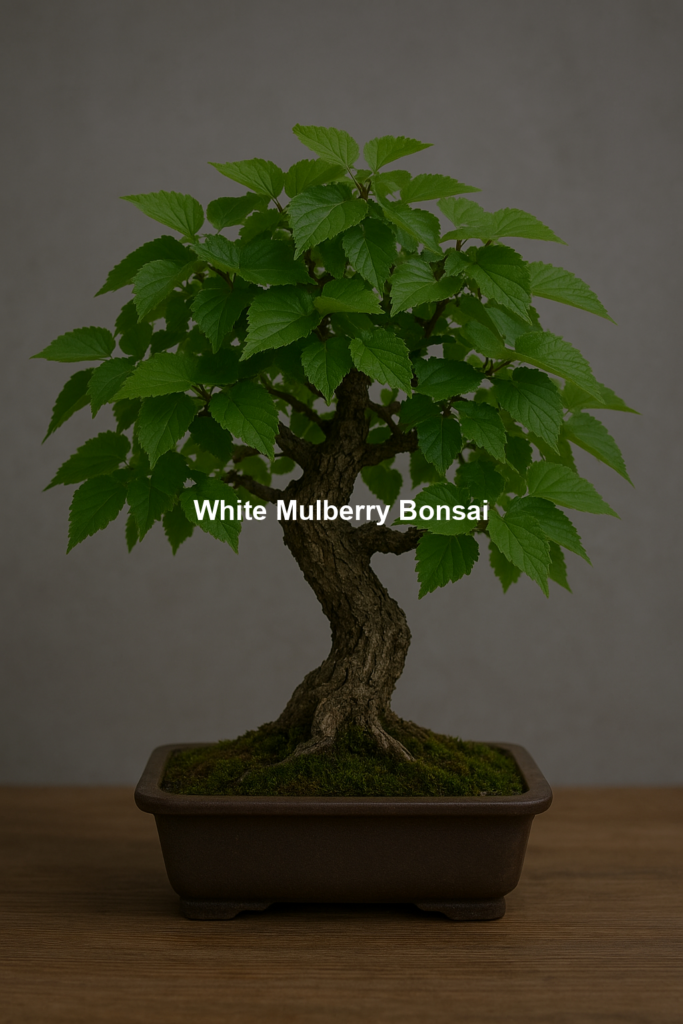
White Mulberry Bonsai (Morus alba) offers a striking blend of delicate foliage and graceful form that makes it a favorite among seasoned bonsai artists and interior designers alike. Its adaptability to container culture, rapid leaf development, and tolerance of pruning enable the creation of refined living sculptures that complement contemporary interiors. Understanding the botanical fundamentals, cultural requirements, and aesthetic principles is essential for cultivating a resilient and visually compelling specimen.
Key Takeaways
- White Mulberry Bonsai thrives in well‑drained, slightly acidic media and responds quickly to skilled pruning.
- Consistent moisture, filtered light, and seasonal temperature moderation are critical for sustained vigor.
- Advanced wiring techniques can accentuate the tree’s natural arching habit while preserving structural integrity.
- Integrated pest management and regular health inspections prevent common afflictions such as spider mites and leaf spot.
- A documented care calendar ensures timely fertilization, repotting, and styling interventions throughout the year.
Understanding the Importance of White Mulberry Bonsai
The White Mulberry carries cultural significance from ancient silk routes to modern urban landscapes, symbolizing growth and adaptability. In bonsai practice, its rapid leaf renewal provides a visible feedback loop for the cultivator, allowing immediate assessment of watering regimes and pruning impacts. Moreover, the species’ naturally fine branching lends itself to the “shizen” (natural) style, wherein the artist seeks to emulate the spontaneous elegance of mature woodland trees within a confined space.
From an interior design perspective, the light‑green, ovate leaves of White Mulberry Bonsai introduce a soothing chromatic element that pairs effectively with neutral palettes and natural materials such as stone and reclaimed wood. The tree’s modest size, typically ranging from 12 to 24 inches in height when displayed on a tabletop, makes it an ideal focal point in living rooms, offices, and boutique hotels where space is at a premium.
Expert Tips for White Mulberry Bonsai
Soil Composition: A balanced mix of 40 % Akadama, 30 % pumice, and 30 % fine pine bark delivers the necessary aeration and moisture retention. Adjust ratios in response to seasonal humidity variations; increase pumice in winter to prevent waterlogging.
Watering Discipline: Employ the “finger test” to gauge surface moisture—press the fingertip 2 cm into the media; if it feels dry, water thoroughly until runoff appears at the pot’s drainage holes. Avoid splash watering, which can promote fungal spores on foliage.
Pruning Protocol: Conduct structural pruning during early spring when new sap flow supports rapid wound closure. Remove no more than 30 % of the canopy per session to maintain leaf density and prevent shock. For leaf reduction, employ a “leaf‑cut” technique, excising mature leaves to stimulate the emergence of smaller, more delicate foliage.
Wiring Strategy: Initiate wiring in late summer when the bark exhibits optimal pliability. Use aluminum wire of 1 mm for primary branch arcs and copper wire of 0.7 mm for finer twigs. Monitor weekly; remove wiring before it begins to embed into the cambium to prevent scarring.
Fertilization Schedule: Apply a balanced, low‑nitrogen bonsai fertilizer (N :P : K = 10:10:10) bi‑weekly during the active growth period (April–October). Reduce frequency to monthly in the dormant months, and discontinue entirely during the coldest weeks to avoid root damage.
Cultivation Requirements
White Mulberry Bonsai demands a microclimate that mimics its native temperate regions. Provide bright, indirect sunlight for six to eight hours daily; a north‑facing window with sheer curtains often yields the ideal intensity. During winter, protect the tree from drafts and maintain ambient temperatures between 45 °F (7 °C) and 65 °F (18 °C). Supplemental LED grow lights can bridge gaps in natural illumination, especially in high‑latitude homes.
Root health is paramount. Conduct a thorough inspection during repotting (every two to three years) to excise circling roots and prune any necrotic sections. Replace 20–30 % of the old medium with fresh substrate to replenish nutrients and sustain soil structure. Ensure the repotting date coincides with the onset of the dormant season to minimize stress.
Styling and Training Techniques
The “cascade” and “semi‑cascade” styles showcase White Mulberry’s natural propensity for drooping branches, creating a dynamic silhouette reminiscent of a tree clinging to a cliff face. To achieve this, select a shallow pot with a wide brim that permits the trunk to angle gracefully downward. Anchor the trunk with a supportive wire mesh, gradually directing the growth direction over successive growing seasons.
For a “formal upright” presentation, emphasize vertical emphasis by pruning lower branches and encouraging a straight central leader. This approach aligns with minimalist interior themes, accentuating the tree’s architectural presence without overpowering surrounding decor.
Fine‑leaf techniques, such as leaf pruning (defoliation) and leaf‑size reduction through selective feeding, can be employed to produce a delicate foliage texture that enhances the bonsai’s visual lightness. However, limit defoliation to one cycle per year to preserve photosynthetic capacity.
Pest and Disease Management
White Mulberry Bonsai is susceptible to common indoor pests, notably spider mites (Tetranychus spp.) and aphids (Aphidoidea). Implement a routine inspection schedule—examine the underside of leaves weekly for stippling or webbing. If infestations arise, introduce predatory mites or apply a neem oil spray at a concentration of 2 ml per liter of water, repeating every seven days until remission.
Fungal diseases, such as powdery mildew and leaf spot, thrive in environments with high humidity and poor air circulation. Mitigate risk by positioning the bonsai near a gentle fan and ensuring the pot’s drainage holes remain unobstructed. Should infection occur, prune affected foliage promptly and treat with a copper‑based fungicide, adhering to manufacturer dosage recommendations.
Seasonal Care Calendar
| Season | Key Actions |
|---|---|
| Spring | Initiate structural pruning, commence fertilization, monitor for early pest activity. |
| Summer | Maintain consistent watering, reinforce wiring, protect from intense afternoon sun. |
| Autumn | Reduce fertilization frequency, begin leaf‑size reduction, prepare for dormancy. |
| Winter | Relocate to a cool, bright area, cease watering once soil dries, avoid repotting. |
Adhering to this calendar harmonizes the bonsai’s growth cycle with ambient conditions, fostering a balanced vigor that reduces stress and enhances aesthetic development.
Propagation and Genetic Selection
White Mulberry can be propagated via hardwood cuttings taken during late summer. Select semi‑mature shoots, strip lower leaves, and dip the cut surface in a rooting hormone containing indole‑3‑butyric acid (IBA) at 500 ppm. Place cuttings in a mist propagation chamber set to 70 % relative humidity and a temperature of 68 °F (20 °C). Roots typically emerge within three to four weeks, providing material for future bonsai projects or diversification of the collection.
When sourcing plant material, prioritize genetically stable clones known for compact growth habits and disease resistance. Certified nurseries often provide lineage documentation, allowing the cultivator to select specimens with proven performance in container environments.
Aesthetic Integration in Interior Spaces
White Mulberry Bonsai serves as a living artwork that can be strategically positioned to delineate zones within an open‑plan layout. Pair the bonsai with natural stone pedestals or reclaimed timber trays to accentuate its organic character. Lighting design—utilizing directional spotlights with a 2700 K warm hue—can highlight the leaf texture during evening hours, creating an inviting ambience.
Consider color coordination: the tree’s soft green foliage complements muted earth tones, while contrasting it against deep charcoal or navy backdrops amplifies visual impact. In hospitality settings, a cluster of modestly sized White Mulberry specimens can function as a “green wall” focal point, delivering both aesthetic appeal and improved indoor air quality.
FAQ
How often should I water my White Mulberry Bonsai?
Watering frequency depends on ambient temperature, humidity, and the moisture retention of the soil blend. In warm, dry conditions, daily watering may be required, while cooler months often allow watering every two to three days. The finger test—pressing 2 cm into the substrate—provides a reliable gauge; water thoroughly when the media feels dry at that depth. Always ensure excess water drains freely to prevent root rot.
What is the ideal light exposure for a White Mulberry Bonsai indoors?
White Mulberry bonsai thrives in bright, indirect illumination, ideally receiving six to eight hours of filtered sunlight per day. A north‑ or east‑facing window with sheer curtains offers sufficient intensity without the risk of leaf scorch. In rooms lacking natural light, supplemental full‑spectrum LED fixtures positioned 12–18 inches above the canopy can replicate the required photosynthetic photon flux.
Can I train my White Mulberry Bonsai into a cascade style in a shallow pot?
Yes, the species’ flexible branches respond well to cascade training. Select a shallow, wide‑rimmed pot that accommodates the downward arc of the trunk and primary branches. Begin wiring the main stem at a gentle 30‑degree angle, anchoring it with a mesh or wire support. Incremental adjustments over several growing seasons, combined with careful pruning of lower shoots, will reinforce the cascading silhouette without compromising structural stability.
How do I prevent spider mites on my White Mulberry Bonsai?
Spider mites proliferate in dry, stagnant air. To deter them, maintain moderate humidity levels (45‑55 %) using a room humidifier or a pebble tray with water. Regularly mist the foliage with lukewarm water, especially during the hottest months. If an infestation appears, introduce predatory Phytoseiulus mites or apply a neem oil spray at 2 ml per liter of water, repeating the treatment at seven‑day intervals until the mite population recedes.
When is the best time to repot my White Mulberry Bonsai?
The optimal repotting window aligns with the onset of dormancy, typically late autumn to early winter. At this stage, metabolic activity slows, reducing transplant shock. Remove approximately 20–30 % of the old medium, prune any circling or dead roots, and re‑plant in a fresh, well‑draining substrate. Avoid repotting during active growth periods (spring and summer) unless the tree exhibits severe root bound conditions.