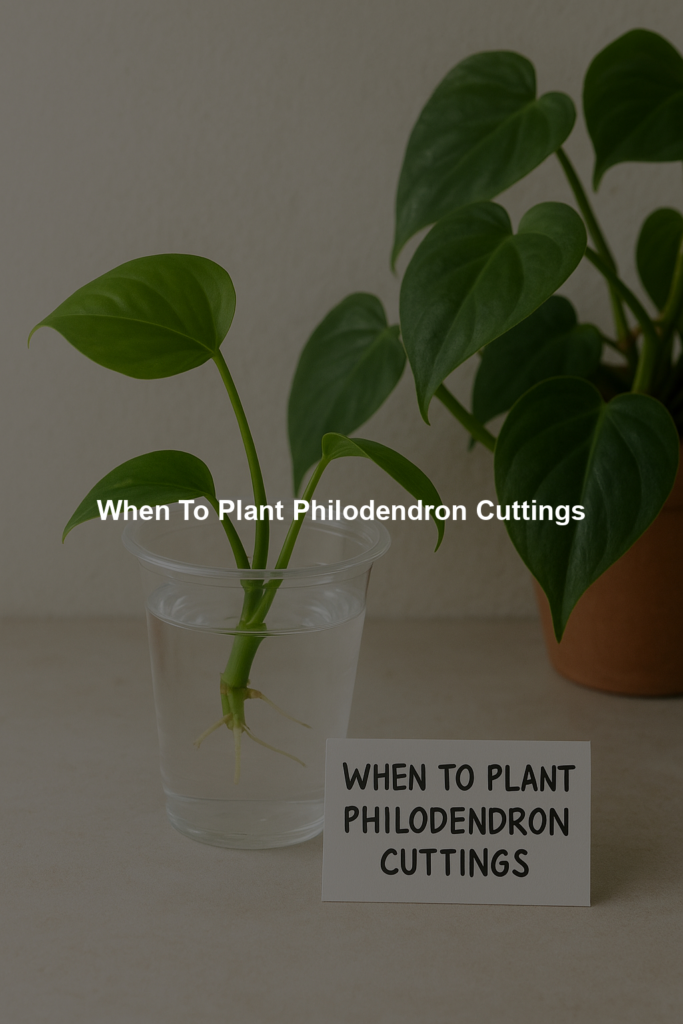
When To Plant Philodendron Cuttings is a decision anchored in seasonal rhythms, ambient temperature, and moisture regimes; mastering these variables ensures rapid root development and long‑term vigor. As a horticulturist with fifteen years of experience, I observe that precise timing reduces shock, maximises nutrient uptake, and aligns the plant’s growth cycle with indoor environmental control.
Key Takeaways
- Ideal rooting occurs when daytime temperatures range 70‑78 °F and night lows stay above 60 °F.
- Early spring and early autumn provide the most balanced photoperiod for leaf‑cutting acclimation.
- Use a sterile, well‑draining medium and maintain 70‑80 % humidity for the first two weeks.
- Avoid direct midday sun; bright, indirect light accelerates callus formation.
- Adjust fertilizer strength to ¼‑½ of normal dosage until new growth appears.
When To Plant Philodendron Cuttings
The first decisive factor is temperature stability. Philodendrons, being tropical understory plants, respond poorly to sudden temperature fluctuations. Begin propagation when indoor heating or cooling systems maintain a steady range of 70‑78 °F for at least 48 hours. In temperate zones this window typically opens in late February to early March, and reappears in late September through October.
Light intensity must also be calibrated. Philodendron cuttings thrive under 1,000–1,500 foot‑candles of filtered illumination. A north‑facing window with sheer drapery, or a south‑facing window equipped with a sheer curtain, provides the requisite intensity without risking photobleaching. Supplemental fluorescent or LED fixtures positioned 12–18 inches above the cutting can extend the optimal window by four weeks.
Moisture management is a third pillar. The rooting medium—commonly a 1:1 blend of peat moss and perlite—should be uniformly moist but never saturated. A misting schedule of once every two hours during daylight, followed by a full water replenishment on day three, creates a humid micro‑environment that mirrors rainforest understory conditions.
Understanding the Importance of When To Plant Philodendron Cuttings
Timing influences hormonal balance within the cutting. High auxin concentrations, naturally present in the lower nodes, are most effective when the plant’s metabolic rate aligns with ambient warmth. Planting too early, when temperature is below 65 °F, impedes auxin transport, resulting in sluggish root emergence and increased susceptibility to fungal infection.
Seasonal photoperiod also signals a shift from vegetative dormancy to active growth. In winter months the reduced daylight curtails photosynthetic capacity, limiting carbohydrate reserves available for root development. Conversely, during the equinox periods—approximately March 20 and September 22—photoperiod lengthening triggers a natural growth surge, making these dates optimal for cutting insertion.
Expert Tips for When To Plant Philodendron Cuttings
Select a healthy mother plant exhibiting vigorous new growth; the lower node of a 4‑6‑inch stem segment yields the greatest rooting potential. Make a clean, diagonal cut just below a node using a sterilized pruning shear to expose fresh cambium tissue.
Immediately dip the cut end into a 0.1 % indole‑3‑butyric acid (IBA) rooting hormone. Excess powder should be tapped off to avoid concentration spikes that can cause abnormal callus formation. Place the prepared cutting into the pre‑moistened medium, ensuring the node is fully covered while the leaves remain above the surface.
Cover the pot with a clear polyethylene bag or a propagator dome to retain humidity. Incorporate small ventilation slits to prevent stagnation; a 2 % daily air exchange rate maintains oxygen flow without compromising humidity.
Monitor for root emergence after 10–14 days by gently probing the soil surface. Once a network of fine white roots is visible, gradually acclimate the plant to lower humidity over a 5‑day period before transitioning to a standard potting mix.
Propagation Techniques Beyond Standard Cuttings
Air layering offers an alternative for large‑leaf cultivars where cutting size may be limited. Select a mature stem, make a 2‑inch upward incision, insert moist sphagnum moss, and seal with plastic wrap. This method can be initiated later in the season, extending the propagation window by up to six weeks.
Tissue culture, while laboratory‑based, provides year‑round propagation capability for commercial growers. However, the cost and aseptic expertise required limit its practicality for most home gardeners.
Environmental Variables that Refine Timing
Relative humidity (RH) should be maintained at 70‑80 % during the first fortnight. Deviation beyond 85 % fosters mold growth; dropping below 60 % desiccates the cut surface, delaying callus formation. Use a hygrometer to track RH and adjust misting frequency accordingly.
Soil pH between 5.5 and 6.5 mirrors the natural acidic conditions of tropical forest floor litter. Periodic soil testing ensures the medium remains within this range, preventing nutrient lockout that can conceal timing‑related deficiencies.
Common Pitfalls and How to Avoid Them
Over‑watering is the most frequent error; saturated media occlude oxygen, leading to root rot. Employ a drainage layer of coarse vermiculite and test moisture with a finger press before each watering.
Excessive light intensity can scorch emerging leaves, especially when the cutting lacks a robust root system. Position the cutting away from direct sun and use a sheer curtain to diffuse the light.
Neglecting sanitation—using unsterilized tools or re‑using propagation media—introduces pathogens that obscure the effect of proper timing. Adopt a strict cleaning protocol for all equipment after each use.
Selecting the Optimal Medium
A 1:1 ratio of peat moss to perlite offers the ideal balance of water retention and aeration. For growers preferring a soil‑based mix, incorporate 30 % orchid bark, 30 % peat, and 40 % coarse sand. Adjust the mixture density to achieve a 45 % water‑holding capacity, verified by the “squeeze test” (a handful of damp medium should release a few drops).
Fertilization Schedule Post‑Rooting
Begin a diluted, balanced (20‑20‑20) liquid fertilizer at ¼ strength two weeks after root emergence. Increase to ½ strength after the first true leaf unfurls, then transition to full strength once the plant exhibits new shoots. This gradual escalation respects the plant’s developing root system and prevents fertilizer burn.
Integration into Interior Design Schemes
Philodendron foliage provides a lush, tropical accent in contemporary interiors. Align planting times with seasonal décor updates to ensure the plant displays mature leaves by key events such as holidays or spring showcases. A well‑timed Philodendron addition offers both aesthetic impact and air‑purifying benefits.
FAQ
What is the best month to start Philodendron cuttings indoors?
The optimal months are March and September, when daylight lengthens and indoor temperatures stabilize between 70‑78 °F. These periods correspond with natural growth cycles, enhancing root initiation.
How long does it take for Philodendron cuttings to root?
Root development typically appears within 10–14 days under ideal temperature, humidity, and light conditions. Full establishment, marked by new leaf emergence, may require 4–6 weeks.
Can I use tap water for misting cuttings, or is distilled water necessary?
Tap water softened to a neutral pH (6.0–7.0) is acceptable for misting, provided it contains low chlorine levels. Allowing water to sit for 24 hours dissipates residual chlorine that could inhibit root formation.
Is rooting hormone essential for successful propagation?
While not strictly mandatory, a low‑concentration IBA rooting hormone markedly increases rooting percentage and reduces lag time. Cuttings without hormone may still root, but results are less consistent.
What signs indicate that a cutting is failing to root?
Persistent wilting, brown leaf edges, and a sour odor from the medium suggest rot or desiccation. In such cases, remove the cutting, sterilize the medium, and restart with a fresh, healthy stem segment.