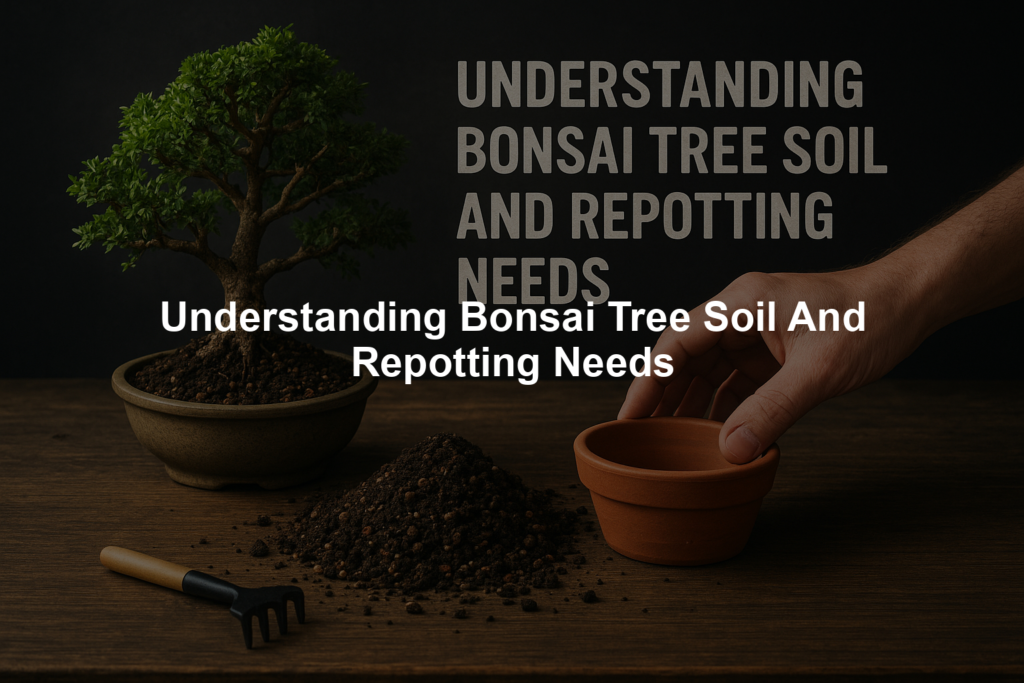
Understanding Bonsai Tree Soil And Repotting Needs is foundational for cultivating resilient, aesthetically balanced miniatures that thrive for decades.
The soil medium is not a mere filler; it actively regulates moisture, aeration, and nutrient availability that dictate root vitality.
Each repotting cycle offers an opportunity to reset the substrate, correct compaction, and accommodate growth spurts.
Key Takeaways
- Proper media blends combine drainage and moisture retention for optimal root health.
- Repotting frequency varies by species, age, and seasonal growth patterns.
- Aeration prevents root rot and promotes robust nutrient uptake.
- Nutrient amendments should align with the bonsai’s developmental stage.
- Monitoring root development guides timely repotting decisions.
Understanding the Importance of Understanding Bonsai Tree Soil And Repotting Needs
The miniature stature of a bonsai is achieved through meticulous control of the root environment.
A well‑engineered soil matrix mimics the natural forest floor while providing the precision required for container growth.
Neglecting soil dynamics leads to restricted growth, pest susceptibility, and premature decline.
Expert Tips for Understanding Bonsai Tree Soil And Repotting Needs
Select a base medium that offers coarse texture, such as Akadama or pumice, to ensure rapid drainage.
Incorporate organic components sparingly; excess humus can retain water and suffocate fine roots.
Schedule repotting during the dormant period for most species, typically early spring before bud break.
Employ gentle root pruning to stimulate fine root proliferation without over‑stress.
After repotting, water thoroughly to settle the media and eliminate air pockets.
Soil Composition Fundamentals
A balanced bonsai soil comprises three core elements: an inorganic structural component, a mineral retention agent, and a minimal organic fraction.
Inorganic components (e.g., pumice, lava rock, calcined clay) create macro‑pores that expedite excess water removal.
Mineral retention agents like Akadama or volcanic ash hold sufficient moisture to sustain root metabolism between waterings.
Organic matter, when used, should be pre‑composted and limited to 5–10 % of the total volume.
Organic vs Inorganic Media
Organic media decompose over time, gradually altering pore structure and nutrient release.
Inorganic media remain stable, preserving the designed drainage profile throughout the bonsai’s lifespan.
Hybrid blends leverage the benefits of both: structural stability from inorganic particles and modest nutrient buffering from organic fragments.
Drainage and Aeration
Effective drainage prevents waterlogging, a primary cause of root rot in confined containers.
Aeration, achieved through macro‑pores, supplies oxygen essential for cellular respiration in fine roots.
A simple test—pressing a finger into moist media—should reveal a loose, crumbly texture that rebounds quickly.
Root Health
Fine, fibrous roots thrive in well‑aerated substrates, while thick, woody roots dominate in compacted soils.
During repotting, assess root thickness; excess thick roots indicate chronic over‑watering or insufficient aeration.
Trim problematic roots to a maximum diameter of 1 mm to encourage a denser fine‑root network.
Nutrient Management
Bonsai trees rely on a continuous, low‑dose supply of macro‑ and micronutrients, delivered through both soil and foliar feeding.
Mineral components like Akadama release potassium and calcium slowly, supporting steady growth.
Supplemental fertilization should follow a seasonally adjusted schedule: higher nitrogen in spring, balanced phosphorus in summer, and reduced feeding in winter.
Fertilizer Types
Organic fertilizers (e.g., fish emulsion) provide a gentle nutrient influx but may alter soil pH.
Synthetic slow‑release fertilizers maintain consistent nutrient availability without significantly affecting media composition.
Choose a formulation based on the tree species and its specific nutritional demands.
Repotting Timing and Technique
The optimal repotting window aligns with the tree’s dormancy, reducing metabolic stress.
Young bonsai (2–5 years) typically require repotting annually, while mature specimens (10+ years) can be repotted biennially or triennially.
Assess root density: a tightly packed root ball that resists gentle separation signals the need for repotting.
Seasonal Adjustments
In temperate climates, early spring repotting supports vigorous spring growth.
In subtropical regions, late autumn repotting allows roots to acclimate before the warm season.
Avoid repotting during peak summer heat or severe winter cold, as extremes impair recovery.
Common Pitfalls
Over‑compaction: pressing soil too firmly eliminates essential air spaces, leading to hypoxia.
Excess organic matter: high humus content retains moisture, increasing rot risk.
Inadequate drainage holes: insufficient outlet capacity causes water pooling at the base.
Neglecting root pruning: failure to thin roots limits fine‑root formation, reducing nutrient efficiency.
Selecting the Ideal Soil Blend
Match the soil blend to the bonsai’s species and style.
Coniferous bonsai benefit from gritty, well‑draining mixes, while tropical varieties tolerate higher moisture retention.
A typical mix for deciduous trees: 40 % Akadama, 30 % pumice, 20 % lava rock, 10 % fine organic mulch.
Custom Blend Formulation
Start with a base of 50 % coarse inorganic particles for structural integrity.
Add 30 % medium‑sized mineral retainers to hold water without stagnation.
Incorporate 20 % fine particles to fine‑tune moisture retention, adjusting ratios based on climate humidity.
Monitoring Soil Performance
Regularly inspect the surface for signs of crust formation, which indicates poor aeration.
Conduct the “finger test” after watering; media should feel moist but not soggy.
Periodically lift the pot to assess weight differences between wet and dry states, guiding watering frequency.
Tools and Materials for Repotting
Use a stainless‑steel bonsai rake to evenly distribute media and remove debris.
A root cutter or pruning shears ensures clean cuts that heal rapidly.
Fine mesh containers protect roots from abrasive grit while allowing water flow.
Documentation and Record‑Keeping
Maintain a logbook detailing repotting dates, soil compositions, and observed root conditions.
Tracking these variables aids in predicting future repotting cycles and adjusting media blends.
Digital photography before and after repotting provides visual reference for growth trends.
Advanced Soil Strategies
Layered soil design: place coarse gravel at the base, followed by progressively finer media upward, mimicking natural soil horizons.
This approach enhances drainage while retaining moisture near the root zone.
Incorporate a thin barrier of activated charcoal to mitigate odor and microbial buildup.
Integrating Soil Care into Overall Bonsai Maintenance
Watering schedules should reflect soil moisture dynamics; faster‑draining mixes demand more frequent watering.
Pruning above‑ground foliage reduces transpiration demand, aligning with the soil’s water‑holding capacity.
Pest management includes monitoring for root‑feeding insects that thrive in overly moist media.
FAQ
How often should I repot a mature bonsai?
Mature bonsai typically require repotting every two to three years, though the exact interval depends on growth rate, species, and soil condition.
Assess root density during annual inspections; if roots fill the pot and begin circling, schedule repotting at the next dormant phase.
Avoid excessive frequency, as frequent disturbance can weaken the tree’s established root system.
What is the ideal pH for bonsai soil?
Most bonsai species thrive in slightly acidic to neutral soil, with a pH range of 5.5 to 6.5.
Testing kits or digital meters can confirm the media’s pH after mixing.
If adjustments are needed, incorporate elemental sulfur to lower pH or horticultural limestone to raise it, applying modestly to avoid rapid shifts.
Can I use regular garden potting mix for bonsai?
Regular garden potting mix is generally unsuitable because it retains excessive moisture and lacks the coarse structure required for adequate drainage.
Bonsai media must provide macro‑pores for aeration and limited water retention; garden mixes often lead to root rot and compaction.
If a garden mix is the only option, amend it heavily with pumice, grit, and Akadama to achieve the necessary texture.
How do I know if my bonsai’s soil is too compacted?
Signs of over‑compaction include slow drying after watering, a hard surface that resists gentle probing, and reduced leaf vigor.
Perform the finger test: press a fingertip into the moist media; resistance beyond a light firmness indicates compaction.
Remedy by gently loosening the surface layer during watering or repotting with a coarser blend.
What role does organic matter play in bonsai soil?
Organic matter contributes modest water retention and slow nutrient release, but it decomposes over time, altering soil structure.
In bonsai, the proportion of organic material is kept low (5–10 %) to maintain consistent drainage.
Use well‑composted bark or leaf mold sparingly, and replenish as it breaks down to preserve media balance.