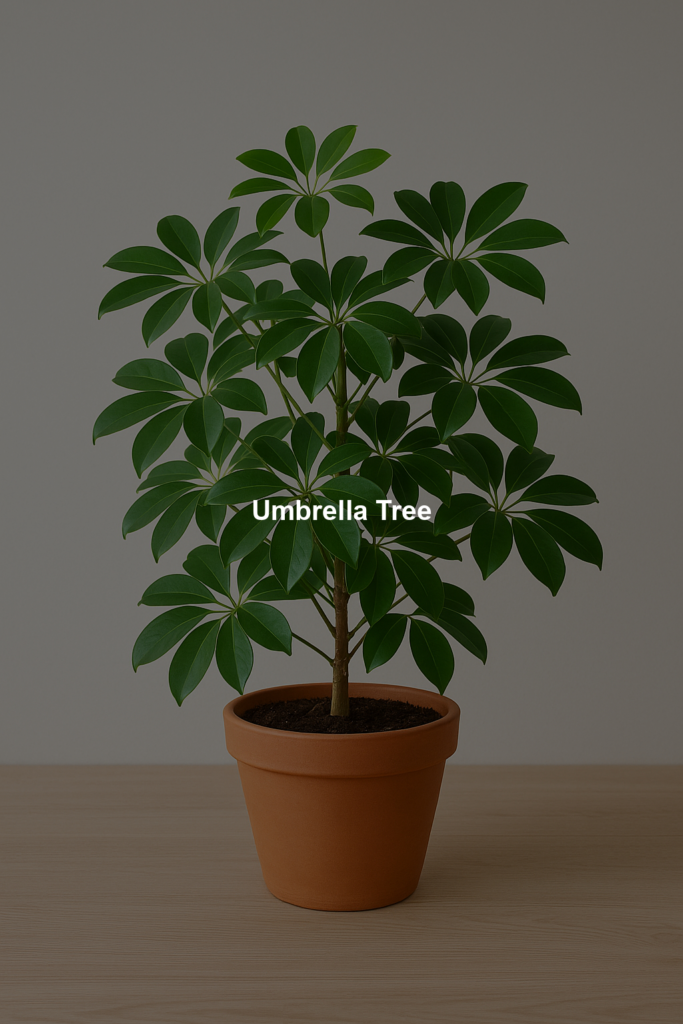
The Umbrella Tree (Schefflera arboricola) has earned its reputation as a resilient, architecturally striking addition to contemporary interiors. Its glossy, palmate foliage offers a tropical silhouette that adapts to a range of lighting conditions, making it a favored specimen for both private residences and commercial spaces. Understanding its physiological needs and aesthetic potential is essential for horticulturists who aim to integrate this plant into sophisticated design schemes.
Key Takeaways
- Tolerates low to bright indirect light; avoid direct midday sun.
- Water when the top 2 inches of soil feel dry; reduce in winter.
- Prefers temperatures between 60‑75 °F; protect from drafts.
- Prune to control size and encourage a fuller canopy.
- Repot every 2‑3 years using a well‑draining peat‑perlite mix.
Understanding the Importance of Umbrella Tree
The Umbrella Tree provides a sculptural element that complements minimalist and maximalist interiors alike. Its dense leaf clusters create a natural partition, softening architectural lines without overwhelming the space. Moreover, the plant contributes to indoor air quality by absorbing volatile organic compounds, a benefit supported by multiple environmental studies.
In design narratives, the Umbrella Tree serves as a living focal point. Positioned near seating zones, it invites occupants to linger while subtly enhancing acoustics through leaf density. Its adaptability to container forms—ranging from floor‑standing pots to wall‑mounted baskets—expands its utility across diverse spatial configurations.
From a horticultural perspective, the plant’s relatively slow growth rate reduces the frequency of major repotting events, conserving resources and minimizing disruption to its visual impact. This characteristic aligns with sustainable design principles increasingly valued by modern architects.
Expert Tips for Umbrella Tree
Light Management: Place the Umbrella Tree near east‑facing windows where it receives gentle morning illumination. In west‑facing locations, employ sheer curtains to diffuse harsher afternoon rays that can scorch the leaf margins.
Watering Discipline: Adopt the “finger test” to gauge moisture; insert a clean finger 2 inches into the substrate. If resistance is felt, postpone watering. In winter, extend the interval by 25 % to accommodate reduced transpiration rates.
Fertilization Schedule: Apply a balanced, slow‑release fertilizer (10‑10‑10) at the start of the growing season. Avoid excess nitrogen, which can promote leggy growth and diminish leaf robustness.
Pruning Technique: Use sterilized, sharp shears to remove any leggy stems at a 45‑degree angle just above a node. This encourages lateral branching, resulting in a denser canopy that reinforces the tree’s umbrella‑like silhouette.
Propagation Strategies
Propagation of the Umbrella Tree is most successful via semi‑hardwood cuttings taken in late summer. Select a 4‑6 inch stem with at least two nodes, remove the lower leaves, and dip the cut end in a rooting hormone containing indole‑3‑butyric acid (IBA). Insert the cutting into a sterile mix of peat moss and perlite, maintain humidity with a clear dome, and provide indirect light. Roots typically develop within three to four weeks, after which seedlings can be potted in standard indoor containers.
Common Pests and Diseases
Spider mites, mealybugs, and scale insects are the primary arthropod threats. Early detection involves inspecting the underside of foliage for webbing or cottony masses. Integrated pest management (IPM) recommends a combination of mechanical removal, neem oil applications, and, when necessary, a targeted horticultural insecticide with low mammalian toxicity.
Fungal foliar blight may arise from overwatering or poor air circulation. To mitigate risk, ensure the potting medium drains efficiently and avoid crowding the plant with other foliage-intensive species. If symptoms appear, prune affected leaves and treat with a copper‑based fungicide following label directions.
Environmental Requirements
Optimal growth occurs in a substrate that mimics the tree’s native forest floor—well‑aerated, moderately acidic, and rich in organic matter. A blend of 40 % peat moss, 30 % perlite, and 30 % coarse bark provides the necessary balance of moisture retention and drainage. Maintain ambient humidity between 40‑60 %; in arid climates, a room humidifier or regular misting can prevent leaf edge browning.
Temperature stability is critical. The Umbrella Tree tolerates short‑term exposures to 55 °F, but prolonged temperatures below this threshold impede photosynthetic efficiency and may cause leaf drop. Conversely, temperatures above 85 °F combined with high humidity encourage fungal proliferation, necessitating vigilant environmental monitoring.
Styling Strategies for Interior Design
When employed as a statement piece, the Umbrella Tree thrives in a large ceramic planter with a muted glaze that allows the plant’s foliage to dominate the visual hierarchy. Pairing the pot with complementary textures—such as natural stone or reclaimed wood—creates a cohesive tactile narrative.
In collaborative office layouts, multiple Umbrella Trees of varying heights can be arranged in a staggered formation to delineate zones without erecting permanent partitions. Their vertical thrust draws the eye upward, fostering a sense of spaciousness in otherwise compact environments.
For residential applications, consider a mid‑century modern credenza topped with a modest Umbrella Tree in a brass‑finished pot. The metallic accent echoes the plant’s glossy leaves, reinforcing a curated aesthetic that blends organic and industrial elements.
FAQ
How often should I repot my Umbrella Tree?
Repotting is recommended every two to three years, preferably in early spring before active growth resumes. Choose a container one size larger than the current pot and refresh the growing medium to avoid compaction. Ensure the new soil mix maintains excellent drainage to prevent root rot.
Can the Umbrella Tree tolerate direct sunlight?
While the Umbrella Tree is adaptable, prolonged exposure to direct midday sun can scorch leaf margins, leading to browning and leaf drop. It thrives in bright, indirect light; east‑ or north‑facing windows provide optimal conditions. If a sunny location is unavoidable, employ sheer curtains to diffuse the intensity.
What is the ideal watering schedule for indoor Umbrella Trees?
Water when the top two inches of soil feel dry to the touch. This typically translates to once a week during the growing season and every ten to fourteen days in winter, though ambient humidity and temperature fluctuations may require adjustments. Always empty excess water from the saucer to prevent standing moisture.
Are Umbrella Trees safe for pets?
The Umbrella Tree contains mild toxins that can cause oral irritation, vomiting, or diarrhea if ingested by cats or dogs. It is advisable to position the plant out of reach of curious pets or opt for pet‑safe alternatives in households with vulnerable animals.
How can I encourage a fuller canopy on my Umbrella Tree?
Strategic pruning is the most effective method. Trim back leggy stems just above a node to stimulate lateral bud growth. Additionally, rotating the plant quarterly ensures uniform light exposure, preventing uneven elongation and promoting a balanced, dense foliage arrangement.