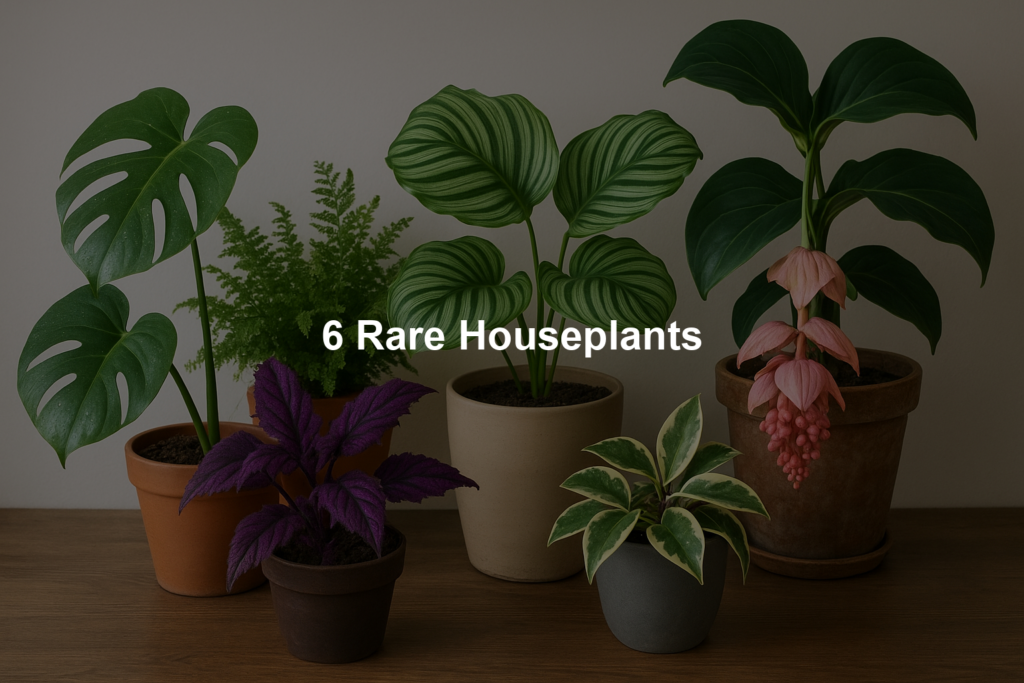
Rare houseplants have transitioned from botanical curiosities to design statements, captivating collectors and interior stylists alike. Mastery of the six most coveted specimens enables horticulturists to balance aesthetic ambition with sustainable cultivation, ensuring each plant thrives within modern interiors.
Key Takeaways
- Precise light, humidity, and watering regimes differentiate successful cultivation from common failure.
- Propagation techniques vary widely; tissue culture and stem cutting dominate for most rare species.
- Ethical sourcing mitigates the impact of illegal trade, preserving wild populations while satisfying market demand.
Understanding the Importance of 6 Rare Houseplants
The rarity of these six selections stems from limited natural habitats, stringent propagation challenges, and high collector demand. Their unique foliage patterns, growth habits, and physiological adaptations make them focal points in design schemes. Moreover, their scarcity drives a premium market, influencing both horticultural practice and interior design economics.
Expert Tips for 6 Rare Houseplants
Attention to micro‑environmental variables is essential. Deploy calibrated hygrometers, LED spectra calibrated to 6500 K, and substrate blends that mimic native epiphytic or terrestrial conditions. Regular monitoring of pest pressure—particularly spider mites and mealybugs—prevents irreversible damage.
Cultivation Requirements for 6 Rare Houseplants
Variegated Monstera deliciosa ‘Thai Constellation’
Native to tropical rainforests, this cultivar thrives under bright, indirect light with a photoperiod of 10–12 hours. A well‑draining aroid mix containing orchid bark, perlite, and coconut coir retains moisture without waterlogging. Weekly misting maintains ambient humidity above 60 %.
Philodendron ‘Pink Princess’
Preferring medium light, the ‘Pink Princess’ displays striking pink variegation when positioned near an east‑facing window. A peat‑based substrate enriched with worm castings supports steady nutrient uptake. Allow the top inch of soil to dry before watering to avoid rhizome rot.
Alocasia ‘Polly’
Alocasia ‘Polly’ demands high humidity—ideally 70 %—and bright filtered light. A substrate of equal parts sphagnum moss and orchid bark encourages aeration. Water with lukewarm, distilled water to prevent mineral buildup on leaf margins.
Hoya ‘Kraken’
An epiphytic vine, Hoya ‘Kraken’ requires intense, direct sunlight for at least four hours daily. Mount the plant on a cork slab with a minimal sphagnum layer to replicate tree‑bark conditions. Water sparingly; allow the medium to dry completely between applications.
Stromanthe ‘Tri‑Stripe’
Tri‑stripe foliage emerges under medium to low light, with a pronounced color gradient from deep green to cream. Use a lightweight, peat‑rich mix with added perlite for drainage. Mist daily to replicate its understory habitat.
Radermachera ‘West Indian White’
This subtropical tree tolerates bright, indirect light and benefits from a gritty, well‑aerated potting medium containing pine bark and coarse sand. Keep soil consistently moist but not saturated; excessive wetness leads to root crown rot.
Propagation Strategies for 6 Rare Houseplants
Tissue Culture for Monstera and Philodendron
Commercial growers employ sterile tissue culture to multiply variegated Monstera and Philodendron lines, ensuring genetic fidelity. Sub‑culture intervals of 4–6 weeks yield robust plantlets ready for acclimatization.
Stem Cuttings for Alocasia and Stromanthe
Take 4–6 inch stem sections containing at least one node. Dip cut ends in a dilute rooting hormone (500 ppm IBA) and place in a high‑humidity propagation dome. Roots typically develop within three weeks.
Leaf Cuttings for Hoya ‘Kraken’
Select healthy, mature leaves, remove the petiole, and place the lamina on a sterile, moist medium. After 4–6 weeks, tiny plantlets emerge from the leaf margin, a hallmark of many Hoya species.
Air Layering for Radermachera
Identify a 6‑inch branch, make a shallow upward incision, and encase the wound in moistened sphagnum moss. Secure with plastic wrap and wait 8–10 weeks for callus formation before severing and potting.
Design Integration in Interior Spaces
Focal Points and Spatial Planning
Position variegated Monstera on a sculptural stand within an open‑plan living area to command visual attention. Pair with minimalist furniture to allow the plant’s complex leaf architecture to dominate the composition.
Layered Greenery
Combine the delicate, trailing vines of Hoya ‘Kraken’ with the bold, upright silhouette of Radermachera for vertical contrast. This layering creates depth while maintaining a cohesive botanical theme.
Color Coordination
Leverage the pink blush of Philodendron ‘Pink Princess’ against neutral palettes to introduce subtle accent color. Pair with muted textiles and brushed‑metal fixtures for a sophisticated aesthetic.
Market Availability and Ethical Sourcing
Certified Propagation Facilities
Seek growers accredited by CITES and local horticultural societies, ensuring plants are propagated responsibly and not harvested from vulnerable wild populations. Documentation of provenance protects both buyer and ecosystem.
Pricing Trends
Due to limited supply, prices for these six specimens range from $150 for a modest Hoya cutting to $1,200 for a mature, variegated Monstera. Seasonal fluctuations align with propagation cycles and import restrictions.
Conservation Partnerships
Collaborate with botanical gardens that run ex‑situ conservation programs. Purchasing through such channels directly funds habitat restoration and research initiatives.
FAQ
What light conditions are optimal for the 6 Rare Houseplants?
Optimal light varies by species. Monstera and Alocasia require bright, indirect light, while Philodendron and Stromanthe thrive in medium light. Hoya ‘Kraken’ needs direct sun for part of the day, and Radermachera prefers bright, filtered illumination.
How often should I water each of the 6 Rare Houseplants?
Water frequency depends on substrate moisture retention. Aroid mixes (Monstera, Philodendron, Alocasia) are watered when the top inch dries. Hoya tolerates longer dry periods; allow the medium to dry completely before the next watering. Radermachera needs consistently moist soil without standing water.
Can I propagate the 6 Rare Houseplants from leaf cuttings?
Leaf cutting propagation is effective for Hoya ‘Kraken’ and, occasionally, for Alocasia under high humidity. Most others—Monstera, Philodendron, Stromanthe, and Radermachera—propagate more reliably from stem or node cuttings.
Are there specific pests that target the 6 Rare Houseplants?
Common pests include spider mites, mealybugs, and aphids. Aroid species are particularly vulnerable to root‑rot fungi if overwatered. Regular inspection and the use of neem oil or insecticidal soap can mitigate infestations.
How can I ensure ethical acquisition of these rare specimens?
Purchase only from growers with transparent propagation records and CITES compliance. Avoid wild‑collected plants advertised without certification. Supporting reputable nurseries reduces pressure on natural populations.
What humidity levels support healthy growth for these plants?
Most of the six specimens flourish at 60–80 % relative humidity. Alocasia and Stromanthe benefit from the higher end of this range, while Hoya can tolerate slightly lower humidity if provided with adequate airflow.
Do these rare houseplants require special fertilizer regimes?
A balanced, water‑soluble fertilizer (20‑20‑20) applied at quarter strength during the growing season supports vigorous growth. Reduce feeding in winter months when metabolic activity declines, particularly for Monstera and Radermachera.